Wednesday, June 17, 2020

THE 1828 HUNGARIAN PROPERTY TAX CENSUS : CLASS - STATUS - IDENTITY : HUNGARIAN GENEALOGY PRO TIP #5

THE 1828 HUNGARIAN PROPERTY TAX CENSUS : CLASS - STATUS - IDENTITY : HUNGARIAN GENEALOGY PRO TIP #5


Genealogically, I use the 1828 census when trying to break through some brick walls, searching for the names of people who were adults in 1828 on this census. Then I try to find the same people in the church records for the same settlement. I also use this census to get more information about individuals and families, to better imagine their lifestyle which was highly depended on class and status. 

Your ancestors may also appear on the Urbarium 1767 - the census that I wrote a lot about previously. Or you may be able to go forward to the 1868 census.  If you're seeking Jewish ancestors, there are also special Jewish census to cross-reference. 

Just remember that this 1828 census is a census of people who are considered taxable - land owners.  The economy is mostly agricultural but your people may not own the land they work on!  Land includes the patch of land that someone owns a home on and vineyards which might be at another location or shared among family members.  

Let's say you found someone on this census who looks interesting. You're going to go to church records for that same habituation.

Let's say you locate someone in a church marriage record who was born in or before 1828. On some records the place that a bride and groom are from (or born) is listed. Some not. If you find the bride or groom (or both) listed with other locations, you want to check that other settlement in 1828 as well.  

A person is listed on this 1828 census as head of household so chances are he or she is an adult. Although it's possible they are teenagers due to inheritance and/or being orphaned, if I see there are 2 "productive" adults at a location, knowing that few people live to be very old, I start out by figuring that it's probably a married couple. Their children are not listed because they are not considered productive or they don't have any yet or they have left home.  I figure that the head of household was probably born about 1810 or earlier.  I might try the surname in a genealogy database such as FAMILYSEARCH along with the location (being careful that records now titled with SLOVAKIAN SETTLEMENT NAMES were once HUNGARIAN SETTLEMENT NAMES) and ask for BIRTH/BAPTISMAL records for years 1750 to 1810. This may bring up one candidate or many. 

More often, because most surnames are common, and it seems that as you get nearer to 1800 the records seem to be less informative and sparse, what you may find is the names of people in a settlement who could be the parents or grandparents of children born to them. 

My experience thus far is that however far they may travel to marry or live, the bride and groom seem most often to be of the same status. For brides this means living an entire life at the status level they were expected to live when they were born, which is their father's status.  This is because noble women who married down did not pass their class or status on to their children. Never the less, I believe that they and their children were given more respect in a community.

Despite the social and cultural restrictions imposed upon people because of their birth class or status, you can get a feel for who may have married "up."  Or "down."

This census takes place in feudal times. Therefore on most records from this feudal era, a mention of the person's status is made on all records

You may live your entire life as it was expected to be when you were born including having a limited number of potential marital partners. How could your status change?

Being the especially good "familiar" of a kind and generous nobilis - one who still holds land and is considered rich - might help you stash a little coin away for a rainy day. Bad luck might mean that your house or village burns down and you loose everything but people will still acknowledge who your ancestors were. Crop failure could do you in and take the entire village down. You might show yourself to be especially loyal, valiant, or efficient in a military action and become favored and given the gift of noble status or land. Maybe you're an especially beautiful young woman with natural graces and you get noticed by a man of a slightly higher rank than you whose proposal prevents you from accepting the hand in marriage of the boy next door. Maybe you are a noble woman who has an affair or is raped and you have an illegitimate child but if you're willing to marry a man of lesser status at least you'll have a husband and a roof over your head. Perhaps you become an esteemed priest or member of the clergy or join a monastery or nunnery. (Doing so may prolong your life!) Or maybe you're one of the few who manages to live into adulthood, with many children surviving, and into old age your descendants make sure you always have enough and more.

Here's another scenario.

Notice the surnames and relationships. How does a person with Subinquillis status, who has no animals, no vineyard, no orchards or forests or meadows, no house EAT?  They are not going to beg money at the intersection and then go buy fast food. They probably can't afford to dine out every night. Chances are they are related to another family with a higher status or more money such as being the younger brother of the wealthier person.  They probably show up at the old main house for meals. Of course we speculate, but if the speculations lead to a research path that provides certain proofs we can entertain it, if not accept it. Why would this person who seems to have nothing even be on this census?  Perhaps he is a craftsman or in business and owns a studio or a hut.  He is not a serf or slave or sharecropper renting land.

Building the families through births and marriages, also look into DEATHS. Knowing who is ALIVE in 1828 helps you match the names on the census. A recent death might result in someone else owning the house or land.

Using church records against the 1828, I found a young couple, married at 18 listed as servants, in a small settlement.  However, at the birth of their third child they were listed as Subinquillis, and after their fifth, as Inquillis. I believe the status change came with inheritance.  Of the several men listed on the 1828 with the same surname, one of them had the same GODPARENTS for his children as the man listed as being in the Commune/Colony, although of lesser status.  I consider that these two men are related, pending more research, likely the younger is the one with a lesser inheritance.

This post is part of a series.  To bring up all posts click on the tag: Gen Tips : 1828 Hungarian Census

C 2020-2025 Magyar-American BlogSpot All Rights Reserved including Internet and International Rights

Sunday, June 7, 2020

THE WONDER OF AMERICAN FOOD BANKS - THE CORONAVIRUS-19 EXPERIENCE

So, I'm in frequent contact with a senior I admire, someone who is very picky about what foods she eats.  She can afford to be picky.  On the way over to visit with her, I saw some tents being set up near a school.  Since in California there has been a move towards homeschooling or learning by virtual contact with a teacher and classroom, this same location was where hundreds of laptop computers were given free to students.  I stopped to ask what was going on and it turned out the place had been selected randomly for a major food bank in Los Angeles to give away food because they had "too much."  I was told that this food was not the usual cans and peanut butter.  They had produce.  I decided to accept some food to take to her.

This is what was in the boxes they gave me.

Onions - no brand

Apples - no brand (we assume Oregon)

Nectarines from the FAMILY TREE FARM in Reedly, California

Carrots from FRUTIA - KERN RIDGE GROWERS, Arwin, California

Celery from FOXY USA - Nunes Company, Salinas, California

Potatoes from IDAHO FRESH in Menan, Idaho

Lemons from BELLE OF PIRU, Fillmore-Piru Citrus, Fillmore, California

Strawberries from BEACH STREET FARMS, Watsonville, California

Lettuce from GREEN GIANT, Chuck Brothers, Salinas California

I was AMAZED.  I also worried that the reason that there was so much produce donated or purchased by some entity of our United States of America government was that these things were going to go bad if they were not soon eated.  My friend outright refused the strawberries, saying that they were on the top 20 list for foods that hold poisons and should only be eaten if organic.

I'm APPRECIATIVE.

The celery went into a soup heavy with celery.
The carrots into another soup, heavy with carrots.
She used the lettuce because it was Green Giant.
The nectarines were out of this world delicious.

How WONDERFUL - for now - that so many people are going to food bank giveaways in order to stay in ever shrinking budgets.


C 2020 Magyar- American BlogSpot

Wednesday, June 3, 2020

HOW ARE YOU COPING WITH THE CORONAVIRUS-19, PROTESTS - LIFE?

Comments is on.  How are YOU?

I'm OK, but I realize this is situational.  I currently live far from the protest centers  where violence and mayhem have ruined, in my opinion, the peaceful protest which was supposed to be called for by the BLACK LIVES MATTER movement.  The destruction is abhorrent to me.  I believe these destroyers are criminals and there aren't prisons enough for them.  I don't want anyone like that in my life. 

I'm relatively safe. This doesn't mean I'm not concerned.  I live in a multi racial and multi ethnic neighborhood and I worry that suddenly it won't be peaceful and safe here. Some people in the area have resisted covering their nose and mouth with masks, which I sensed was a protest earlier.  I hate wearing one but I do it. 

I also read about what's happening in Hungary - as well as Poland and Slovakia. 

In general, currently, Hungary, Poland, and Slovakia, are much more conservative countries than the United States is.

What is conservative or liberal is a question, I realize. I consider myself to be a person who tries to see all sides and tends to be moderate - liberal on some issues and conservative on others. 

In general the United States does accommodate more diversity and has more prosperity.  That said, the United States has not experienced World War I or World War II on it's own turf and is not struggling to maintain a national identity. 

Back in the day, I used to overhear American who considered themselves to be Patriots, respond to destructive people, by saying "They should go back where they came from" or "If they hate America so much, why don't they leave - find some other country that will take them?" 

That is easier said than done.  Most people don't have so much mobility.  And no country wants incoming criminals.

How can you peaceably speak up for yourself, your people, and help guide your country the right way, if you aren't running for political office yourself?


VOTING is something that so many people neglect to do.  This year we celebrate the fiftieth anniversary of the right to vote for women in the United States.  It was fought for and yet so many people don't bother. The turn out for some elections is a bad joke.  This is a basic right, a basic way of making your needs and opinions heard.  It takes some research and some thinking to decide who to vote for if you do not wish to be dictated to by a political party preference.  As you know if you read this blog, I was/am a Bernie Sanders fan. He left the campaign and Joe Biden is the default Democratic candidate. It's my guess that he will chose a woman as his running mate and I suspect she will be Kamala Harris of California. It would be the politically-correct thing to do, although I hope Biden will make his choice based on a person's ability first.

For those of you interested in African American (Black) voting rights in the United States, here is a good history link: 15th AMENDMENT - AFRICAN AMERICAN VOTING RIGHTS

Wednesday, May 27, 2020

THE HU : WOLF TOTEM : MONGOLIAN INSPIRED MUSIC


Hello, some of you are wondering why I posted this video when the song is a modern recreation of a song that the invading Mongols, tribes lead by Genghis Khan, might have sung. I think it has a place here at Magar-American because I know that some present day Hungarians, and Hungarian-American's have some Genghis Khan DNA. Most of his DNA, by the way, is said to have come from descendents of the women in his harem, and there's speculation on just how often it is that the soldiers got around to raping, or settling and taking a bride, but as we know, the origins of the Hungarian language and culture are speculative.

Friday, May 22, 2020

THE 1828 PROPERTY TAX CENSUS OF HUNGARY - PROFESSIONS and CROPS : HUNGARIAN GENEALOGY PRO TIP #4

THE 1828 PROPERTY TAX CENSUS OF HUNGARY - PROFESSIONS and CROPS : HUNGARIAN GENEALOGY PRO TIP #4

By reading the village or town information on this census, you get a good idea about how small or large it is, how populated, how many people have enough to live in their own little house or big mansion.  You will see if the village or town has a number of craftsmen who specialize.  Tailors, Weavers, Shoemakers, Coopers, Wagoners.  Mostly you see a lot of FARMERS. If you see one of the farmers in your heritage on this census, you may also learn if he grew grapes or rye, lentils or peas, apricots or apples.


Here are some popular professions:

priest - pap

nun - apaca
carver - farfarago 
gazda - farmer
szabo - tailor
takacs - weaver
cipőkészítő - shoemaker
kadar - cooper
kocsi készítő - cart maker
lo edzo - horse trainer
lótenyésztő - horse breeder
katona - soldier
kereskedő - trader
közvetítő - negotiator
borkészítő - wine maker


Here are some popular crops:

garlic - fokhagymaseeds 
nuts - magok
sunflowers - napraforgók
tomato - paradicsom
peppers - paprika
chilis - chillis
barley - árpa
rozs - rye
búza - wheat
maize - kukorica
peaches - őszibarack
apricots - sárgabarack
apples - almák
pears - körte
almonds - mandula
grapes - szőlő
beets - celka
potatoes - krumpli

This post is part of a series.  To bring up all posts click on the tag: Gen Tips : 1828 Hungarian Census

C 2020-2025 Magyar-American BlogSpot All Rights Reserved including Internet and International Rights

Tuesday, May 19, 2020

PANDEMICS? THIS LIST IS ENLIGHTENING!

DAILY NEWS HUNGARY - TEN DEADLIEST PANDEMICS

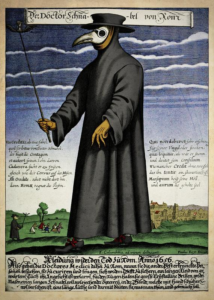
Black Death, plague doctor, Europe, disease, pandemic

The Black Death is still the worst pandemic to ever hit Europe but I had no idea there were other population devastating plagues before it.

All of us alive today have been born to a heritage of people who didn't die from these pandemics that killed off millions without first reproducing.  Sometimes I do wonder if this is nature, or the earth as a living being, shucks off humans when there are just too many people.  Sorry!  I'm not ready to die.  Not ready to go!  I don't want to kill anyone with my presence and I'm so tired of wearing masks and being so isolated.  But sometimes I do wonder.  Certainly climate change - unexpected weather patterns - and crop failures - starvation and malnutrition - make a person more susceptible to any illness.

EXCERPT: Europe needed 150 years to recover from losing 20 million people.  The Black Death entered Hungary around 1349.


A popular image of the plague was this!  Hey, have we started making masks that look like birds beak? Or is this a version of "The Grim Reaper"?

I now realize that my genealogy, one line that has the potential to go back to the 1400's, may be effected by deaths from Plague.  I already know people in my lines died of smallpox, of TB, of child-birth, of long illness, and in mysterious ways. I have seen the documents where a priest writes in cholera - plague.  But maybe someday if I endure and am lucky I will find the provable link to that potential ancestor who lived in the 1400's.  Maybe I will find that some of my ancient relatives died of Bubonic Plague.

C 2020 Magyar American BlogSpot

Sunday, May 17, 2020

THE BLACK DEATH (BUBONIC PLAGUE) IN HUNGARY

Watching the Black Plague video "Return of the Black Death" made me wonder how people living in Hungary survived during the early 14th century when England was so devastated.  This article from WE LOVE BUDAPEST is quite intriguing.  WE LOVE BUDAPEST : HISTORY OF PLAGUES IN HUNGARY.


Excerpt: Thus, in search of reasons, contagion was considered a divine judgement on people's sins.  Extreme solutions to this were found by the supporters of the flagellation movement, who, during the first plague of 1347-53, wandered around communities enmass in apologetic self-thrashing to put an end to the epidemic.  This happened across Hungary and the rest of Europe.

Wednesday, May 13, 2020

MUCHA DRAWING #45


The painting is from Dover Publishing.

EXCERPT: ALphonseMaria Mucha (1860-1939) was a Czech Art Nouveau painter and decorative artist, most well known for his images of women.  He produced many paintings, illustrations, advertisements and designs.  He was born in the town of Ivancice, Moravia (todays region of Czech Republic.)

The site is comprehensive. 

Monday, May 11, 2020

RETURN OF THE BLACK DEATH - THERE'S SOMETHING THE BUBONIC PLAGUE AND THE CORONAVIRUS-19 DON'T HAVE IN COMMON

Amazon.com: Watch BBC - Return of the Black Death | Prime Video And that is that the identical Bubonic Plague that killed 60 percent of the population of London within nine months and an estimated five million people in England in the early 1300's is still around now - in rats.  If a rat manages to pass it on to a human, which is extremely rare, antibiotics work.  The Black Death was probably a mutation.

I highly recommend you watch this film, which includes the archaeology of digging up burials to examine the skeletons for possible clues.  It's understood that while this plague started in rats, it transferred to humans and then it was human to human contamination.  What we're trying to avoid with Coronavirus-19.

What the statistic were dependent on was not just the evidence of mass burials but also the fact that documents exists - WILLS and the equivalent of DEATH CERTIFICATIONS - for so very many people, people who were common, such as cobblers and candlestick makers.  People got sick and had maybe 3-4 days to live so they hand wrote their wills while they still could.

Scientists have discovered that CLIMATE CHANGE and the MALNUTRITION that followed were a significant factor in IMMUNITY and who died.  It had rained every day for months, meaning food was scarce.  The bones and teeth of those who died sometimes show evidence of this malnutrian.

A question is, how, with so many people dying all around and so many graves being dug did the living go on? The surprise is that King Edward III took charge.  He managed society so that it remained stable enough for people to continue to obey the law rather than let chaos and terror rule.  For one thing, though the burials are extensive, people were buried with respect and some religious ritual.  They were placed in graves and then a layer of grave was covered over with red clay!  This may have sealed in the disease in the grave.

C 2020 Magyar-American BlogSpot
All Rights Reserved

Saturday, May 9, 2020

THE 1828 HUNGARIAN PROPERTY TAX CENSUS : HEADS OF HOUSEHOLDS : HUNGARIAN GENEALOGY PRO TIP #3

THE 1828 HUNGARIAN PROPERTY TAX CENSUS : HEADS OF HOUSEHOLDS 
HUNGARIAN GENEALOGY PRO  TIP #3

Since only the name of the head of household is listed on the 1828 census of Hungary, it may be quite difficult to know without a doubt if the person listed really is your ancestor. 

In the United States it was 1850 before the names of all the family members were given -the name, age, gender, occupation, and birthplace of every individual in a household. The early United States Census', which also only listed the head of household included a statistical analysis of females, males, and ages. Sometimes you can correlate an American head of households to named wife and children in later years. 

Unfortunately most of the censuses for Hungary were specific to counting Jews, general statistics, or most of the country's documents are not available or missing or lost forever.  (I check every few months even when I'm not hot on my personal genealogy and keep hoping that HUNGARY is going to find and release more 1869 census and other information on the HUNGARICANA / NATIONAL ARCHIVES OF HUNGARY website!  I read a comment on the site that was negative on the "Mormon" (meaning Latter Day Saints - LDS - FAMILYSEARCH) offerings.  It said new documents are received every day!) 


CONSIDER :

WIDOWS HELP!

When we see the given and surname of a woman listed as a WIDOW, who is now in possession of the estate due to the death of her husband, we may have her birth name or her married name.  Vid. KATALIN LUKACS can be searched for as KATALIN LUKACS.  You can find candidates who MARRIED and who are alive in 1828.  Vid. KATALIN LUKACSNE is a woman named Katalin who married a man named Lukacs who died.  Check deaths of men named Lukacs and see if any of the records mention his bride or widow Katalin.  Vid. JANOS LUKACS is a woman who was married to Janos Lukacs. Look for his death record and see what the name of the woman he married is. We focus on 1828 and before. Using this technique, we can possibly recreate the families and make the connections.

IS ANYONE LISTED AS A Junior / Jr. or Senior /Sr.?  Though rare, I have noticed this on Latin language records and in my personal genealogy.  What this means is that the man is named after his father, and they are BOTH ALIVE.  As soon as a Senior dies, there is no longer a Junior, unless he has a son named after him who then becomes the Junior, while he assumes the Senior. (Further research revealed that not only was there a Junior and Senior but that my Junior was the third in a line of men named Istvan.) So, if your ancestor's father is already dead and had the same given name, the Jr. isn't the man you're looking for.

ALL THE PERSONS WITH THAT SURNAME IN THE LOCATION
But mostly what you see are lists of men.  So, they are men alive in 1828.  If I see that there are 2 productive adults in the household, though it could be a couple people 60 or less, or any variation of householders, I start with an assumption that they are a husband and wife without adult children living with them, just youngsters.  I run a search for that head of household's name in BAPTISMAL databases and I subtract 16 years for a birth date for the youngest and 60 years for the oldest - so a birth range of 1768 to 1812. That narrows things a bit, especially if the surname isn't common in that location.

On the BIRTH RECORDS, MARRIAGE RECORDS, and DEATH RECORDS you want to look for notations of their status such as Commune, and profession, or class.  These may help you make a connection between a landholder candidate and the census versus a landless peasant. (You may also venture to the 1867 census to see if the same families are still in the location. Though populations did tend to stay put in a location for generations there was movement.)

LISTS of the ENUMERATION ARE NOT ALPHABETICAL - nor are there house numbers.

Pending more research on this, I looked over many lists, and I noticed that people who seemed to have about as much as each other were together. Possibly the census taker might have begun with the richest person in town and gone down from there or maybe it was just the neighborhood, just like now when people who own houses about the same size and worth are in a neighborhood together. Or maybe all the farmers were producing peaches to be sold at market are together. Remembering that these are LANDOWNERS who are potential TAXPAYERS, even seeing 300 or more listed, in a town were house numbers go into the 700's, I'm reminded that there are a lot of people who are workers who own nothing, who are serfs.

WHO DO YOU HAVE DOCUMENTED PERSONS AS ALIVE IN 1828?  Following them is probably the most popular tactic.

Here is where your previous research that documents births, marriages, and deaths can be extremely useful. You know who is alive, what the names of the adults are. You know who is widowed. You have a LOCATION and you go to the 1828 for that location, looking for the names. Perhaps this will help you go back in time.  More likely it will help enrich your understanding of your ancestor's lives or help you imagine their place in history.

FOUND A SUSPECT - READ MORE ABOUT HIM and HIS ESTATE
At the end pages for each location there are some written paragraphs. Seek through these for more information on the head of household / property owner and what he's up to!

More advice forthcoming!

This post is part of a series.  To bring up all posts click on the tag: Gen Tips : 1828 Hungarian Census

C 2020-2025 Magyar-American BlogSpot  All Rights Reserved including Internet and International Rights

Monday, May 4, 2020

RELIGION IN THE OLD COUNTRY - YOU MAY BE SURPRISED BY YOUR ANCESTORS' BELIEFS

This may have happened to you, as you self identify as Hungarian or Hungarian- American.  As you go back you notice that today's map of Hungary doesn't cover the places that your ancestors lived.  They lived in what is now Slovakia, possibly Ukraine, or Poland (Galicia - Austrian Empire).  Maybe today's Romania. That's why trying to be sensitive to changes in borders and finding old maps that show the names of villages and towns in different languages is important. 

You may start reading around it and realize that borders were also not as solid as they became, that people traveled between countries, especially for business, and that you are seeing some of the same surnames in these various countries.

What spawned this post?  I was reading records for Galicia, Poland, and found a note that a priest had written that a certain person near Dukla, Poland, had gone to marry a Hungarian in Zemplen!

As well, you may find that ancestors in your family lines did not necessarily self identify as Hungarian, but German or Ruthenian.

I've noticed that intermarriage happened between people of different ethnicities more often if they were the same religion.  Discovering that some of my ancestors were not of the religion I was raised in felt freeing to me.

Years ago I talked on the phone with a man in Buffalo, New York, who I found in an interesting way. I was scanning the internet, playing around, and put in the name of my great great grandmother.  Up came an obituary for a woman who lived in Buffalo with the very same name.  Not only that, but she wanted any money sent to celebrate her death to the church that my great great grandmother had been baptized in!  What if we were related?

I realized that this woman who had just died in America was not my great great grandmother.  However, I was excited to learn the name of the church in that town because I'd been reading those records on microfilm off and on for months and there was no mention of the name of the church.  Also, when I did not find certain records I was looking for in those church records I read the history.  There had been a small chapel there that belonged to a different Christian denomination and Latter Day Saints had no records from that chapel.  At the time I wondered if a change in religion had something to do with not being able to find what I needed.

Well, this obituary I was reading also said that the woman had a son in California.  Believe it or not, I found his number in the phone book, called him on a land line, he answered, and when I told him the reason for my call, simply gave me his dad's number in Buffalo.  He too answered the phone without knowing who was calling.

I had done extensive genealogy on the people with this surname and after he explained that we were NOT related and why, I was able to tell give him information about his siblings and parents from my research.  He was so impressed with my knowledge of the town he invited me to go there and visit with him.  I wish I had.  Live goes on and I lost contact with him.

One of the things he told me is that the people from that town were not very religious.  He said that they had changed religions over and over again over the previous hundred or so years, depending on who owned the place.  I've heard this before, that when a certain big land owner or person who owned a town converted to be Protestant, it was expected that the people who lived there would to, and back again to Catholic. This person "owned" the place and in a sense the loyalty of the people, kind of like the way your boss owns you.

C 2020 Magyar-American BlogSpot

UPDATE September 2022  You may be interested in my Genealogy Tips.  You can use the term Genealogy in the Search feature embedded in this blog to bring up a variety of topics of research interest. 

Saturday, May 2, 2020

THE 1828 HUNGARIAN PROPERTY TAX CENSUS : DECODE and READ : HUNGARIAN GENEALOGY PRO TIP #2

THE 1828 HUNGARIAN PROPERTY TAX CENSUS : DECODE and READ : HUNGARIAN GENEALOGY PRO TIP #2

HOW TO READ THE INFORMATION ON 

THE 1828 PROPERTY TAX CENSUS 

I'm providing more detailed translations than I can find elsewhere.

The press printed headings on this census are consistent, though you may find yourself wondering what the words mean, as they are in LATIN. There are fourteen CATEGORIES of Questions with subcategories in each. Remember LATIN was something of a common language in Europe, a unifying language, but should you encounter this census with headings in Hungarian or German, well, follow the columns below in any case.


1) THE NAME OF THE HEAD OF HOUSEHOLD, first and last. NOMINA CONTRIBUENTIUM. The women listed are almost all V -  Vidua - Widows.  The name listed will be the woman's given and surname at birth even if she is widowed. That is unless you see ne as a suffix to the surname.  Then that would be her dead husband's surname.  Example V Maria Lukacs - her maiden name.  V Maria Lukacsne - her husband's surname was Lukacs. Women with property in their own name were considered very good to marry.  Look for the death record of the husband and go forward to see if and when she remarries.

2) THE NUMBER OF PEOPLE LIVING IN THE HOUSEHOLD ages 18 - 60 who are productive. EX HIS SUNT.  This is tricky.  Teenagers and children are not counted.  Neither are those thought to be too old to work. Therefore, if you see 1, that means one productive adult.  2 likely means a productive adult couple.  But 2 does not necessarily mean these are married people.  It could be a father and son or a mother and daughter or two brothers. What's tricky about it is that at the time children started to work young and most teenagers were also working around the house and farm, especially in the summers.  Consider the count would be the number of people who are CONTRIBUTING to the FINANCES OF THE HOUSEHOLD. So, an Old Mother (over 60) could be living there but not be considered as contributing even if she's out back with the hoe every day and feeding the pigs. Clearly by 60 in 1828 you are considered very old - out to pasture!  Death records prove very few live to be that age. I once saw a woman who was 96 at death.  The priest mentioned "Extreme Unction."

3) The status / class of the contributing adults.  We're still in feudal mentality in 1828. ONLY OWNERS OF PROPERTY ARE ON THIS CENSUS, not serfs or slaves. You might think of it as an emerging middle-class census.  But a PROPERTY OWNER and potential taxpayer may just have a house and garden or even less. You may want to find these same people on the URBARIUM 1767 and see if anyone went up or down the status / class ladder!

HONORATES - Honored People (May see if this correlates with the Perpetual People on the URBARIUM 1767.) Some interpretations are that this means Honored Professionals such as Doctor and Lawyer/ Judge/ Politician.  A person of achievement (or their ancestors were considered to be so) or simply that the person is educated.  Another interpretation has been that the person is NOBLE status.  However, noble status includes an exceptionally large population of people, many who are poor, so I go with the notion that the person is on this census due to their wealth first.

CIVES - Citizens (This must mean Not Foreigners) It seems to me that this column is rarely checked.  Perhaps I haven't encountered a place in 1828 were the person, with means (money), has just come in from a foreign country.

COLONI - Farmers - people settled on the land. (In some Church Records you'll see some people's addresses as Coloni, meaning on the farm outside of the town, rather than a house number. It is usually people living in "commune" that you see in church records - generally on farms.  (Not communes in the 1960's sense where people who are not family pull their resources or live off the land.)  On some church records you'll see the word "sub." (an abbreviation after the settlement name indicating the family is Subquilini. 

INQUILINILiterally, My Guests (I'm letting these people stay.)  As Tenants (Yea, if they pay their rent!)

SUBQUILINI - Literally My Guest's Guests (More people I'm letting stay.)  Someone who has a sub tenant lease which they could be paying to the Inquilini or the Coloni.  Remember that a Land Baron owns the acres. These questions were meant to get a feeling for what he's worth.  He has people on his property who pay him rent or goods or services in exchange for living there. They are not Guests invited as we think of it now.  Think "By my Grace."  Such as "Luckily I let them live here and pay me with 52 days labor a year."

FRATRESLiterally Brothers - Actually sons / males  

FILFA Literally Daughters - Actually daughters / females REMEMBER THESE PEOPLE ARE NOT INCLUDED IN column two, so they are not "productive." Too bad there are no stats on their ages.

SERVI - servants

ANCILLAE - slaves (yes, slaves)
At this time and far into the future there is not so much difference between a live-in servant and a slave. Children are the property of their Fathers.  Women are property of their Husbands. Servants can't say no when told to do something, any more than slaves can, though they may have more "freedom." (Slaves sometimes raised their rank after a period of time in Europe.  In Early America, as an example, people sometimes worked without payment for the family that paid their ticket to sail over the Atlantic by working for free for seven or more years. They were called "indentured servants."  Who were the slaves in 1828: they were in some, not all parts of Hungary, the Rom - the gypsies.)

OPIFES - Literally Helping (People who are working part time or seasonally such as migrant workers or farm laborers who do a little this and that. For instance, you might have opifes to help you to pick a seasonal crop or can goods.  Be careful not to confuse this word with OPIFEX, which means "industrialist" and indicates a tradesman.)

MERCATORES - Merchants who have product to sell. Traders who take commissions for their part in the selling process. Let's say the head of household has extra grain to sell.  This person is hired to sell it. An agricultural broker.

QUAESTORES - For the purposes of this census, think Financial Advisory, Money Man, CFO, Tax accountant; some expert who does the math and helps the property owner.  (Important since they might also negotiate the tax.)

4) How many houses do the people in column one own? DOMUS A QUIBUS CENSUS SOLVITUR  Home which this census focuses on. This means at this location.  I've found the same people owning houses in various places. It's location-based question, not a question of a person's entire net worth. At the time there must have been an understanding of what a typical house was worth based on size, condition, and location, just as there is now.
NRO.  These moneys.
RII - ??
V. - ??  (I believe these three estimations are used in a mathematical formula for estimating the value / taxes.)

5) There might be other dwellings on the property other than the house.  So the entire property - let's say a house, a shed, a small barn, a garden, etc, is called a HOMESTEAD.  FUNDI INTRAVILLANI - the Estate. (Try not to think of Beverly Hills real estate when you hear the word Estate.  Even today in the U.S. a person can die and leave an "estate" of $1.)

What is the value of all this land and the dwellings on it?
ORGYARAM CONSVETUM PRETIUM - This is not a literal translation (I'm still working on it) but I believe it's something like Overall Consensus of Price or Value or Premium (Highest) Value.

6) Hungary is mostly agricultural, so most people farm or at least have a home garden plot. The government wants to know how much GRAIN is being produced on that land which is sold or traded so it's beyond the home garden.  Again that is at this location.  The grain may be considered "cereal" which people eat, or grain for animals to feed on. TRANSLATIONS TO FOLLOW.

7) How many MEADOWS does the person own?  Meadow brings visions of broad vista of property with a stream flowing through and blooming with wild flowers but in this case think GRAZING LAND. You set your horse, cattle, sheep, goats, to graze. Certain crops do well grown in meadows.  Usually this is grasses / wheat. So what was the amount harvested and what was the profit from the meadow?

8) WINEVery Important! What Hungarian doesn't own a vineyard?  Again, the harvest, profit, and how many people work to pick the grapes is of interest to the government. Wine is Big Business.  

Many Hungarians grew only enough grapes to make wine for home use.  As in most of Europe, common wine was drunk with meals instead of water, or mixed with water, as the alcohol made it was safer to drink. If you see that a person owns 1/4 or 1/2 a vineyard at that location, it's probably that other family members - in particular brothers or relatives with families - are sharing a vineyard.  (Are there other land owners in this location with the same surname? Do they also share a vineyard?  Could they be related?)

9) ORCHARDS!  Again what is the harvest and the profit?
For Hungarians apricots and apples and peaches and cherries are prime crops.

10)  PEROCRA : BULLS, COWS, and HORSES : LARGE DOMESTICATED, WORKING ANIMALS.  ( I think the horse is most needed. It's like asking if you have transportation or are on foot. Oxen did farm labor of pulling machinery.) Think WORKING ANIMALS though a cow can be milked.

Details:

-BOVES juggles - COWS - Boys - in other words BULLS
-Vaccaue foetau - Pregnant Cows - COWS
-Vacae Sterile - Cows who are not pregnant /sterile. STEERS
-Juvenci and Juvenca - juvenile cows - male and female  annos superante
3 years old - HEIFERS
-Juvenci and Juvenca - juvenile cows - male and female 
- annos superante 2 annose superante - 2 years old or older  
-EQUI curriferi  - HORSES wild and of the herd -
 males and females (horses) over the age of 3
 males and females (horses) over the age of 2
(Female bovines born as twins to a male bovine are usually sterile. Some male bovines are castrated.  The concern here is what breeding stock the farmer has.)

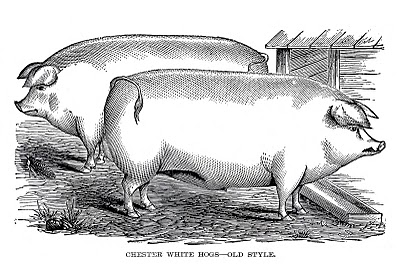
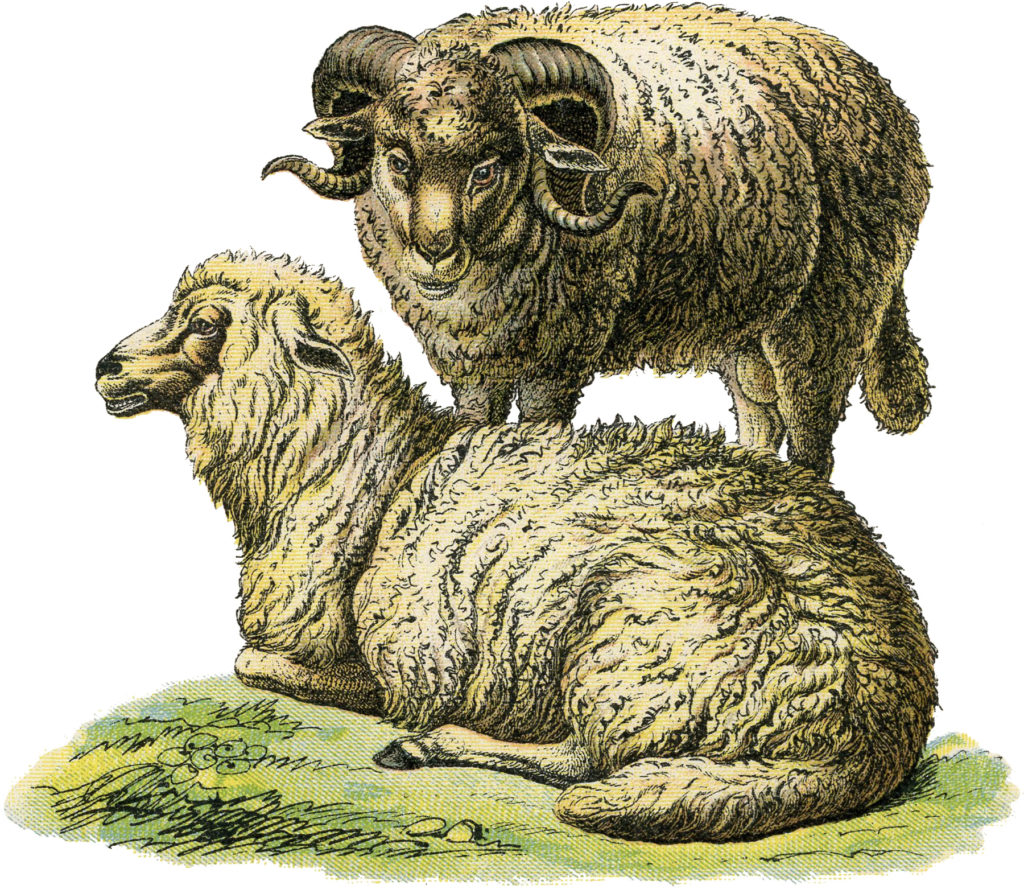
11) PECUTESSHEEP, PIGS, and GOATS are considered to be SMALL DOMESTICATED ANIMALS. (But have you ever seen a 400 pound pig?!)  Goats were needed for milk. They were as always famous for not being picky eaters and good for clearing weeds. Think SMALL ANIMALS FOR FOOD.


Details: unum annem complentes : how many in the last year? 
OVES - SHEEP 
SETIGERI - HOGS
CAPRAE - GOATS

12) SYLVAE : FORESTED land. Woods: Trees for nuts and lumber.  Almonds and Hazelnuts are prime tree crops. The questions is not about a small amount taken for personal use by the family but where there is a large amount to be weighed.

13) MISCELLANEOUS. (Could be interesting...)  A place for the census taker to observe that there are buildings on the property that are not the family home or for family use specifically.  For instance, he might list that there is a ruined castle on the property or that there is a chapel or a blacksmith shop. The census taker has an eye for what is income producing or is evidence of wealth.

14) NOTES of the census taker. (His observations of you and what you own could have impact. Be nice to him.  Don't offer up too much information.  Offer him a meal or a glass or wine, probably not a bribe!) 

At the end of each location book, there are also handwritten notes. These are important to look at as well. They are about the various people who were listed and what they own.  While the person listed was probably there when that accounting took place, these notes may have been added later as a report to the government. 


This post is part of a series.  To bring up all posts click on the tag: Gen Tips : 1828 Hungarian Census

C 2020-2025 Magyar-American BlogSpot All Rights Reserved including Internet and International Rights

This blog has wonderful references and links as well as genealogy research information on multiple topics.