Tuesday, October 22, 2024
THE AUSTRIAN-HUNGARIAN EMPIRE : GALICIA : CADASTRAL MAPS : HOUSE NUMBERS : GENEALOGY GEN-TIPS SERIES #7
Tuesday, October 8, 2024
THE AUSTRIAN-HUNGARIAN EMPIRE : GALICIA : CADASTRAL MAPS : HOUSE NUMBERS : GENEALOGY GEN-TIPS SERIES #5
Austrian-Hungarian Empire - Gen Tip # 5While MAGYAR AMERICAN focuses on Hungarian culture and society, we can learn a lot from research in Poland, Slovakia, and other parts of what was the Austrian-Hungarian Empire.
Hungary and Poland have history together - both good and bad. Rakoczi's armys destroyed towns in southern Poland, for instance.
I mentioned before, here at MAGYAR-AMERICAN BlogSpot about finding some Hungarian surnames in church records for Galicia - Poland, and a notation in a marriage record in a Roman Catholic church that the bride came from Hungary. That was a small town involved in the wine business. I suspect this would be more true in records for cities, such as Krakow.
I think you'll find that people with means would travel far for marriages. They were also more likely to marry in the more impressive churches and cathedrals. And if you "know" that a certain noble ancestor lived in a place but their marriages and other records seem to be missing consider the larger church or cathedral not too far away.
Although it was an extremely small sample, I recently ran the names of the known nobility who owned a particular area of Galicia just a few miles from the then-Hungarian border in the GENETEKA databases and none of their names came up. So what was happening? First, some of the churches, while incredibly beautiful and ornate inside, didn't seat too many people. So if you were having many guests to your religious ceremony, you needed more space. But then, you probably needed more space for the festivities as well, and somewhere for guests who traveled to stay for a few days. Also, you might have a private chapel or church on your own property and having services there would protect you and your guests from the villagers intent on witnessing the goings-on and invading your privacy. However, this also means that they kept private records of their births and marriages if those names are also not coming up as recorded in any of the dozens of church books now transcribed for the Geneteka databases. Today I would think that such records would make their way to the diocese archive but back in the day? Common people were keeping records of births and marriages and deaths handwritten in their Bible...
In January 2022 I did a series called Pro Genealogy Tips - Galicia which you can reference.
You might want to run some Hungarian surnames in the databases of other European countries as well.
Some of the noble families donated their private records to The National Archives in Hungary.
All posts in this series have the tab Austrian-Hungarian Empire - Gen Tips
C 2024-2025 Magyar American BlogSpot - All Rights Reserved including Internet and International Rights
Saturday, October 5, 2024
THE AUSTRIAN-HUNGARIAN EMPIRE : GALICIA : CADASTRAL MAPS : HOUSE NUMBERS : GENEALOGY GEN-TIPS SERIES #4
MORE MAP RESOURCES
When AUSTRIA ruled Hungary and the southern part of now-Poland, called Galicia, the two countries were subject to modernization notions coming out of Vienna. Because of Austrian rule, census took place, maps were made, educational standards were raised (though that was easier said than done), and military service as well as taxes were demanded.
As previously mentioned, today's house numbers and the numbers on old maps from a hundred or more years ago - and mentioned on church records - are unlikely to coordinate. What's key is to find a map that shows properties on or about the time the ancestors lived in the town. We previously looked at an excellent resource called HUNGARICANA.
But there are other resources for maps.
One of the best is ARCANUM which used to be called MAPIRE. These are historical maps of Europe. The site has four categories. Maps of Europe. City maps. Country maps. And Cadastral maps.
Under Cadastral we link to ARCANUM MAPS : HAPSBURG EMPIRE
As I mentioned in my first post, which was a bit of a history lesson, Galicia - Southern Poland, parts of what is now Ukraine, and what is now Slovakia - as well as some other geographical possessions of the Austrian-Hungarian Empire (aka Hapsburg Empire) fall into one category. So maps at this site include from the HUNGARIAN, CROATION, BUDAPEST, AUSTRIAN, and UKRAINIAN archives. (To find them we may research possible German names for the same settlement.)
But, you may be surprised to learn that our very own LIBRARY OF CONGRESS HAS A WONDERFUL ADVISEMENT AND COLLECTION. You can go right there at this link:
LIBRARY OF CONGRESS : AUSTRIA HUNGARY CARTOGRAPHIC RESOURCES EASTERN EUROPE
Excerpt: As Empires go, that of Austria Hungary was among the briefest, having lasted only form 1867 to 1918, nevertheless, its constituent nations served as major sources of emigration to the Unite States in the late nineteenth and twentieth centuries.
All posts in this series have the tab Austrian-Hungarian Empire - Gen Tips
C 2024-2025 Magyar American BlogSpot - All Rights Reserved including Internet and International Rights
Wednesday, September 25, 2024
THE AUSTRIAN-HUNGARIAN EMPIRE : GALICIA : CADASTRAL MAPS : HOUSE NUMBERS : GENEALOGY GEN-TIPS SERIES #3
Térkép is the Hungarian word for map. Térképek is the Hungarian word for maps. Vármegye is the Hungarian word for county. Some of the maps will use LATIN and some will use GERMAN.
A real find is when the register of a Cadastral Map that was made with the map still exists. The register equates the numbers on the map, the numbers on the map, with the names of the property owners!
This is especially helpful because basically the current day numbering system for buildings cannot be counted on to reflect the place a person lived or the land they owned back in the day. (I know you wanted to use Google maps to see where they lived using that information but...)
In villages and towns, even those with streets that were named and still have the same name today, the numbering system is not the same. For instance, today, if you want an address in a town in America, you will find that the even numbers are on one side of the street and the odd numbers on the other. Houses actually have house numbers on them and that's your official address for mail and packages and probably is the address on your driver's license or ID. Streets and roads are easy to identify with so much signage. That's not how house and buildings were numbered, if at all, in villages and small towns where everybody knew everybody and a stranger could easily get instructions on where to find someone. A local would show where to go by pointing, walking you there, or telling you to follow a curve in the road until you came to a big tree.
Houses in old Europe were often given numbers in the order they were built. I've heard it said that the lower the number the older the building. I've also heard it said that the numbers went up the further from the church. There are many churches that were built near an especially scenic or otherwise good location, such as near a running stream. Usually a settlement came first, and then, if there were enough people to attend a church, a church. (Find out when the church was built and if your ancestors lived in a village before it was build, their church records are likely at another village.)
House numbers on births, marriages, and death records can help you identify family members - even generational members. The house (or farm or estate) number is where the event happened. (That means that if the birth was at the house of the midwife rather than at home the number might not be the family home, but usually midwives came to the house of the birthing mother.) Most valuable are the numbers that appear on marriage records since they reflect where the bride and the groom were living at the time of the marriage, though the ritual happened in the church. You may be able to see if they started their married life in with parents and which household, and perhaps how long they lived there through the births of children, until they found a place of their own. Tradition in Hungarian culture was that the bride went to live with her husband's family.
One last thing. The "house number" may actually not be the number of a HOUSE but of a PROPERTY that has many dwellings on it, such as a communal farmstead. This may account for a number of surnames at that number, including the boy and girl "nextdoor" who marry. It may also represent the property being split among descendants.
So let's take a look at HUNGARICANA DATABASES LINK TO MAPS
HUNGARICANA MAPS LINKS There are many maps of the capital, Budapest, but an array of towns. Don't stop looking if the place you want is not on this list. Instead run a search for the name of the town (which will probably be included in the county.)
Here are cadastral maps of Livazeny - really terrific! See the names of the land owners and then the land they owned. HUNGARICANA - LIVAZENY (fixed link August 14 2025)
Some maps are not of the "town" but of the agricultural land and may include plans for moving water or what crops or trees are planted. Some of these maps include the names of the owners of that land.
Here is a map that is in LATIN and shows where the vineyards and orchards are:
MAPS HUNGARICANA MEGYE - GONC RUSKA
Delineatio praedii Klastrom I (nclito) Comit(tat) ui Abaujvari (Latin)
I ran a search for LIPTO County and all these came up! HUNGARICANA MAPS LIPTO notice that when you click on the map it brings up the modern map/location.
In the next post we'll look at another MAP RESOURCE!
All posts in this series have the tab Austrian-Hungarian Empire - Gen Tips
To bring up all posts in the series click on the label below!
C 2024 Magyar-American BlogSpot
Friday, September 20, 2024
THE AUSTRIAN-HUNGARIAN EMPIRE : CADASTRAL MAPS : HOUSE NUMBERS : GENEALOGY GEN-TIPS SERIES #2
The historical time we are focusing on and is valuable to Hungarian researchers is when Galicia was a territory that was once owned by the Austrian Crown, and then the Austrian-Hungarian Empire. As a territory under the rule of the Austrian Crown and then the Austrian-Hungarian empire, Galicia came into being in 1772, in what was called the 'first partition' (of Poland).There are many opinions about the region during those times. I've listened to academics and rabbis who present their teachings about Galicia on YouTube videos, and well, everyone has their opinion but the man who says it never existed is wrong. It did and there are maps to prove it.
That said, for most of you who are tracing ancestors who were in Hungary, present day Hungarian, Slovakian, Austrian, perhaps Croation, archives will be most important.
SHEPHERDS and SHOEMAKERS on GALICIA - CADASTRAL MAPS
Galicia is the focus of the website Shepherds and Shoemakers, a family history and genealogy site that I respect. It's informative and useful for genealogy. The site came up again when I was searching for information on CADASTRAL MAPS.
In the United States these maps are called Plat Maps. There are sketches, charts, and sometimes plans for the future on these maps. (For instance, I found one in the U.S. that showed the plans for streets, including the street names, that had not been yet paved - which go back to the late 1950's. A land owner and developer used these for many purposes, beyond designing his dream suburb with the names of his wife and children for street names. They were probably used to get the development past city planning officials and as part of a proposal for financing at the bank.)
Cadastral maps can be of value to your family history and genealogy project. Land surveys were done and the map illustrated the boundaries of properties, the real estate. The maps defined legal rights and responsibility regarding property ownership and use. This all tied in with the things one could not avoid. To quote my mom, "death and taxes."
You may be able to tie them in with census, wills, and other documents.
Undertaking the survey and making of the maps was an effort to better understand the towns and villages that it now controlled. The maps helped the government better understand the villages and towns, land ownership, and the value of each settlement that was mapped.
All posts in this series have the tab Austrian-Hungarian Empire - Gen Tips
C 2024-2025 Magyar American BlogSpot - All Rights Reserved including Internet and International Rights
Tuesday, September 17, 2024
THE AUSTRIAN-HUNGARIAN EMPIRE : GALICIA : CADASTRAL MAPS : HOUSE NUMBERS : HUNGARIAN GENEALOGY GEN-TIPS SERIES #1
This is the start of an expansive series on the Austrian-Hungarian Empire and the use of maps.... Stick with me! There's a lot to learn together. As with all my other Hungarian Genealogy Tips, the series name is put on each tab so you can pull it all up.
THE AUSTRIAN-HUNGARIAN EMPIRE : GALICIA : CADASTRAL MAPS : HOUSE NUMBERS
INTRODUCTION TO THIS SERIES : Austrian-Hungarian Empire - Gen Tip #1
This icon, from Graphics Fairy, is being used to designate posts for this series.
A WORD ABOUT THE HISTORY OF GALICIA, CADASTRAL MAPS, and HUNGARY.
You say, "What? I thought Magyar-American BlogSpot was all about Hungarian and Hungarian-Americans! Why are we talking about Galicia? Wasn't that in Poland?
Well... I always advise that a genealogist research the history of the locations that they find their ancestors and use historical records hand in hand with genealogy records. A good part of Poland was part of the Austrian-Hungarian Empire.
The historical time we are focusing on and that is valuable to Hungarian researchers is when Galicia was a territory that was once owned by the Austrian Crown, and then the Austrian-Hungarian Empire.
Austrian-Hungarian Empire
Österreichisch-Ungarische Monarchie in GERMAN
Osztrák–Magyar Monarchia in HUNGARIAN means Austrian-Hungarian Monarchy
Here's some historical background:
As a territory under the rule of the Austrian Crown and then the Austrian-Hungarian empire, Galicia came into being in 1772, in what was called the 'first partition' (of Poland).
GALICIA was a vast expanse, which is now south-central and south - in what is now Podkarpakie (Subcarpathia) Poland, a tiny bit of what is now Slovakia but was Hungary, and a portion of what is now western Ukraine. (It's not to be confused with the Galicia of Spain though that comes up when you use databases.) The name Galicia is supposed to have come from the word Galizien which was Halychyna in Ukrainian and Halicz in Poland.
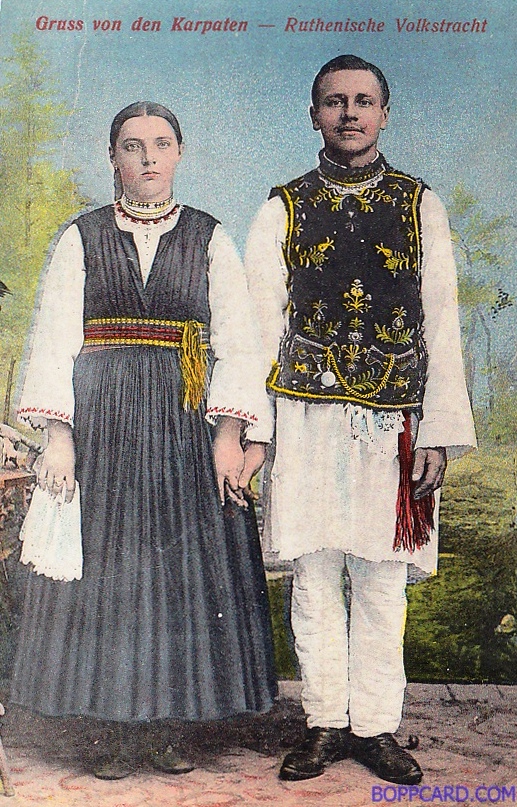
Galicia was already an ethnically diverse area with a Polish and Carpatho-Rusyn (Ruthenian) Slavic settlers, who were mostly Roman Catholic or "Greek" Catholic. (The Greek Catholics were not ethnically Greek but were originally converted to Christianity by Christian missionaries from Greece.) However, though mostly Catholic, there were Protestants such as Lutheran Germans.
As time went on, Galicia was a good place to settle for Jews, and the Jews who came in included some Sephardic roots Jews, who had left after being exited from Spain and Portugal, as well as the Ashkenazi 'German' Jews and Russian Jews. Over time, there came to be a became significant Jewish population, mostly merchants.
There were other immigrations of ethnic Germans into what was Hungary, but now this wave of immigration brought them in from Austria. We find the presence of Germanic surnames in Catholic records and Germans marrying Poles. These Austrian-Germans were often also nobles, administrators, and those in a higher status than the traditionally agricultural "peasants' or the men and women who earned their living through making shoes or other useful items that took skill, craft, and artistry.
We also find Hungarian surnames in Galicia and Polish names in Hungary.
l find that the nobility was intermarrying with nobility of other ethnicities for some time - going the distance to make a good marriage - so today there is some confusion or controversy over who was a Slovak, Polish, Ruthenian, Lithuanian, or Hungarian noble. (And some nobles were also at least partly Italian, Czech, or another ethnicity.)
One thing you should consider is that a surname might have been changed to be more Polish, more Hungarian, more German - especially note the endings: ski, sky, skyi, szke...
Through time, there were very many incursions, raids, battles and wars fought in Galicia and for it before the Nazi's. This included the Mongols and the Tatars - who took men, women, and children into slavery and marched them into the Ottoman Empire of Turkey. It also included the Swedes, and - contrary to the thought that Poland and Hungary were "always friends" Ferenc Rakoczi II, Prince of Transylvania, and his army also came into the Podkarpakie area, devastating towns. There were also the Russians coming into Galicia, who are now in war to take Ukraine, as Russia thinks of Ukraine as a historical part of Russia.
On old maps of GALICIA you see the Carpathian mountain range is to the south, running through what is today SLOVAKIA, but was then HUNGARY. The main trade route is from southern "trade route" towns such as Dukla, Poland, through the Dukla Pass around Cergowa, Poland, and into Hungary. Once the whole region was especially significant in the wine business with travel through the Pass into the Hungarian grape growing and wine making region. Some of the Galician market towns had wine cellars for the storage of wine brought up from Hungarian wine country. There was significant trade between Hungary and Galicia of other items as well. This meant that people who identified as Hungarian and people who identified as Polish or another ethnicity were meeting up.
So valuable was this road through the mountains called the Dukla Pass, because it was the pass with the lowest elevation, the easiest to travel, that many thousands died in World War II trying to control it. As the intention to murder the Jews in Poland became clear, many fled Galicia and came into Hungary. As well, the Carpatho-Rusyn (Ruthenians) were also forced to move by the occupying Germans to other areas than their traditional homeland, dispersing them throughout Poland. Since their homeland included places in Hungary (now Slovakia) some fled there - moving south - rather than be moved around Poland.
Regarding World War II, the Nazi's won. They used the Dukla Pass route to invade Hungary, as one of two major routes into the country. Stories were that one day the people were in the fields and markets and the next they were - gone.
It's a difficult history.
Continue on with this series ....
All posts in this series have the tab Austrian-Hungarian Empire - Gen Tips
C 2024-2025 Magyar American BlogSpot - All Rights Reserved including Internet and International Rights
Friday, September 6, 2024
THE AUSTRIAN-HUNGARIAN EMPIRE : GALICIA : CADASTRAL MAPS : HOUSE NUMBERS : GENEALOGY GEN-TIPS SERIES : NEW GENEALOGY SERIES STARTING SEPTEMBER 17th!
THE AUSTRIAN-HUNGARIAN EMPIRE : GALICIA : CADASTRAL MAPS : HOUSE NUMBERS : GENEALOGY GEN-TIPS SERIES
I hope those readers who come to MAGYAR AMERICAN BLOGSPOT for some help with their genealogy will find this series helpful!
Maps were made to define land boundaries and property ownership, often for purposes of taxation, but also inheritance, and to understand where responsibilities began and ended. This can include "zoning" and the proper use of land. Some maps that were made on paper include colored representations of farm land and crops, building, streets and roads, rivers and streams and lakes, mountains and flatlands...
In the previous centuries in which people lived in an agriculturally driven world, and sometimes "off the land," villages sometimes conspired to keep land in the hands of local families where everyone understand who was who and who owned - or rented - what. Sometimes, in order to do this, marriages were arranged....
Bookmark this site and come back next week to follow the series!
To bring up the posts click on the tag Austrian-Hungarian Empire - Gen Tips
C Magyar American - BlogSpot All Rights Reserved including Internet and International Rights
Saturday, January 22, 2022
TIMELINES - THE DIFFERENCES BETWEEN HUNGARIAN AND POLISH WOMEN IN INDEXES : USING THE POLISH GENEALOGY SOCIETY DATABASE for RESEARCH : GENEALOGY PRO TIP #4
Death records I've encountered that are so far indexed on GENETEKA seem to be the least useful. I was so hoping to confirm the rumors of how certain ancestors died but cannot even find the records despite carefully paging through. Most of the reasons why someone died reveal that medical knowledge was not so advanced as it is today. I have often wondered at old people dying of "inflammation." I think this means the person probably retained water and appeared swollen by the time they died, which happens with some cancers.
I find creating a TIME LINE in which you note the dates of children who were married and what it says about their parents (i.e. is one of both deceased?) will at least help you limit your research.
Starting with a person's birth, follow them through the years for marriages and children. If you notice they are called a widow or widower on a remarriage record, then you know that by that time their previous spouse died. If a child marries, his parents will likely be listed and it will translate to something like:
Jan, the son of the d.p. (deceased parent) Marcus, and Marianna Sobato, means that at the time of his marriage his birth father was deceased, so there is a date that can limit your research in a positive way, but the mother is alive. By listing the births of children to Marcus' wives, and finding their marriages, you may get closer to the date of his death.
Additionally, you may have to go to the records that are not yet indexed or question what is indexed.
HERE IS MY BIG COMPLAINT ABOUT GENETEKA INDEXING.
In Hungarian records it seems understood that a woman is listed by her maiden/birth name at birth, marriage, and death, though in her community she is known as the married woman, Mrs. Szabo or Szabone. (ne suffix.) However, in the Polish records I found women listed under their previous married name in the database. If someone has not noted that with a little :i: (information) icon then basically, you'll have to discover this yourself by reading the original records. Going to the information about her parentage is important so that you have her maiden/birth name. So, you may have to dismiss the database surname of the bride in marriages and go with what you know about the groom rather than the bride's surname. More than one of my ancestors had three marriages due to the deaths of their first two spouses and that a careful indexer bothered to read and note the maiden name on each was of great help and made me aware this was not the case with every indexer.
C 2021- 2025 Magyar-American BlogSpot All Rights Reserved Including Internet and International Rights
This post is part of a series on the subject. To pull all the topics up, click on the tag Pro Genealogy Tips- Galicia
Saturday, January 15, 2022
THE CONCERNS OF THE PRIEST - MARRIAGES : GENETEKA - USING THE POLISH GENEALOGY SOCIETY DATABASE for RESEARCH : GENEALOGY PRO TIP #3
Jewish records (and other minority religions such as Lutheran and Mennonite records) are available in special archives in Poland and JewishGen is a helpful database site for Jewish records.
So far GENETEKA is primarily Roman Catholic and Greek Catholic records. Appearing in Greek Catholic records may indicate that the person is of Ruthenian (such as Lemko) heritage or of a different ethnic heritage than Hungarian or Polish. Research the surname as well, however, because there was intermarriage, especially as we go through the 1800's into the 1900's. Also given names will be a clue as to religion and ethnicity- more on that in another post.
Be aware that if a couple moved to a village where there was only a Roman Catholic church, they might attend and worship there, and so it was with Greek Catholic churches in villages. In America they might settle where an ethnic church and belong there. There might also have been agreements between the couple to raise some children in one religion and others - the other. Typically, if the mother was Greek Catholic, she might want her daughters raised in that church but might allow her sons to follow their Roman Catholic father. **
Just think practically. A person would work hard all week and want to see Church as a pleasure - a respite - and a social opportunity - but how far do they really want to travel? On foot?
If the town also had a Jewish temple, that might indicate that it has a larger population than a village.
What might indicate a "mixed" marriage? Well, if the priest writes in that Banns of Marriage have occurred in two different parishes or churches, that is a clue. Sometimes the name of the church or the name of the other village appears. Check these out on church and village history sites! You may find the name of the church, see photos of it, even find it on a YouTube video tour.
What are banns of marriage? A public announcement - back in the day usually from the pulpit - that a couple plan to marry. Usually three Sundays in a row. The idea was to give people who know the individuals to voice an objection to the marriage and stop it. A popular story device on soap-operas for sure! Check those dates for the day of the week they occurred. Usually this was right before the marriage - but not always. How much time passed between the third announcement and the marriage ceremony?
What were the good reasons to object?
Knowledge that a person is already married to someone else. Or that the person promised marriage to someone else who is alive.
In some cases, that there is some dispute involving the inheritance (of land usually) that needs to be resolved first. (Remember that Old Europeans did a lot of match making and that villagers might have decided what child would marry who when they grew up long before. Sure there were love matches but these were practical people.)
Knowledge that the man - potential father in particular - is not capable of supporting a family.
Too close a relationship. You will find that whole villages are somehow genetically related - many families intertwining. Still there was a general idea that too close cousin marriage was not a good idea.
A strong parental or authority figure objection or for some reason the marriage is seen locally as not good for the community.
The priest will record the names and parentage of the bride and groom including their ages. In some records the actual birth date is listed. If it says 11/3/1879 that means March 11, 1879. The day is first, the month is second.
Did people really not know how old they were? Or lie. It seems sometimes this is true. In my experience they are not too far off.
Legitimacy.
This is not just about being celibate until married for holy religious reasons. The priests baptized so many babies and the illegitimate ones tended not to thrive without the support of a father and everybody knew it. Remember at this time most women were wives and mothers and outside income was the husband's role. Sad to say but some women were taken advantage of by seducers, sexual harassers, and rapists. And sometimes people had affairs. The most important aspect of marriage was for the bearing of and raising of children. You see the death records and you see how few children made it to adulthood and begin to feel a sense of amazement when you notice someone died in their 70's because of senility (they were just old.)
The socio-cultural-religious system endorsed marriage as the best economic way as well.
One of my ancestors was married three times due to his wives dying before he died.
If you see one woman with multiple illegitimate children - no father's name or heritage mentioned - she may be someone who is unlucky in love, a prostitute, or having an affair with a married man. Follow her if you can and see if she every marries. ****
If you take the DNA test and it proves you are not the actual genetic heir of a person on your chart, well it's not unheard of.
Added note Feb 3 2022 Greek Catholic records do not conform to the Julian Calendar at all times and are usually behind. I.e Roman Catholic Christmas is December 25th, Greek Catholic (or Orthodox Christmas) is January 16th. Which means that if a person you are seeking on records was baptized in a Roman Catholic Church on Christmas, that same person baptized in the Greek tradition would show in records baptized on January 16th - and a different year! However, you'll have to research to find out when and where there was conformity and my feeling is this. If the records are in Latin or Polish and not Cyrillic script, then they are likely following the Julian Calander.
** But since the Roman Catholic Church used to insist that anyone who married there would promise to raise their children Roman Catholic, you may find the children all follow the parent whose church they married in.
*** see also how long the children live.
Added note April 2023 JewishGen appears to have sold their database to Ancestry TM.
Added note April 2023. Geneteka is uploading some Lutheran records under the term Evangelical.
C 2021- 2025 Magyar-American BlogSpot All Rights Reserved Including Internet and International Rights
This post is part of a series on the subject. To pull all the topics up, click on the tag Pro Genealogy Tips - Galicia
Wednesday, January 12, 2022
LOOKING AT AN ARCHIVAL DOCUMENT GENETEKA - USING THE POLISH GENEALOGY SOCIETY DATABASE for RESEARCH : GENEALOGY PRO TIP #2
GENETEKA GENEALOGY POLAND the important link!
1) Your need to read Polish is minimal because like many church records in Europe, LATIN is used.
2) If you can get through some handwriting hazards, there are good Latin- English and Latin - Polish reference books at the library or on-line translators! You will soon learn a Derelictus is simply a widow- not a worthless bum!
3) The columns or categories are generally obvious, be it that you are looking for marriages, deaths, or births.
4) You'll have to be patient for indexing is an ongoing project, one you may want to get involved with. So if an index helps you get to the person you're looking for, well, you can still get to the records from there. If your ancestor doesn't come right up in the index, but you have some information from immigration documents such as from the steamship, draft registration, or citizenship papers, you might want to start by reading the records from that place.
5) Get maps and descriptions of villages easily on-line to help you understand your ancestor's geographic and cultural world. Begin with the link above that lists the 21 "Provinces" of today's Poland and record coverage.
CONS :
1) There are missing records that will not ever be indexed because they are simply missing. This is because they were never collected, they were ruined by fire, flood, or some other disaster, or because of war, particularly World War II. Still start out hopeful. (Great Grandma may have been born up in the mountains in the winter and her baptism may have been by midwife (common) and /or not reported at all.)
2) *** Some records you will find twice, in two different handwritings. This is because a small local church might keep a record and then report it to the main parish. It's helpful when one of these records is neatly written. BE AWARE THAT FOR SOME REASON THE COPIES MAY NOT BE IDENTICAL and that you should look at both because some pages may be missing from the original books or the copy.
3) If you have the misfortune of finding a paper - such as a typed letter - tape - over the exact part of the book page you want - you can still write to the archive and ask someone to look under there! Sometimes there were two images taken - the paper moved for one of them.
4) Watch for the naming of other locations when reading records such as where the bride or groom was born or lives at this time. Nat. is an abbreviation for native. It loosely means the person was born there but in general it means that person has lived there a long time. Just like you might be born in Chicago but have moved to Denver 30 years ago. You stopped telling people you are from Chicago long ago.
5) You may be wondering why the person writing the record - usually the priest - has such an interest in what a person's ancestry and legitimacy is... Be blessed that they actually wrote so much because you'll have the names of another generation back quickly. Yes, in some records, especially way back, there may be missing information on the baptism. Such as the name of the mother. (I hate that!) The inclusion of the name of the midwife in both Christian and Jewish records intrigues me. I think it was to say "This person knows this baby belongs to this mother!"
C 2021- 2025 Magyar-American BlogSpot All Rights Reserved Including Internet and International Rights
This post is part of a series on the subject. To pull all the topics up, click on the tag Pro Genealogy Tips - Galicia
Saturday, January 8, 2022
GENETEKA - USING THE POLISH GENEALOGY SOCIETY DATABASE for RESEARCH - LET'S GET STARTED : GENEALOGY PRO TIP #1
I want to guide you in this research as I have in the past so those of you who read MAGYAR-AMERICAN BLOGSPOT for the genealogy tips and history should be interested in this.
GENETEKA is a volunteer driven group in Poland, the Polish Genealogical Society, and so it is a database in progress. SCANS link to exact pages or to other archives where you will personally scan through more images to get to what you want at other sites. (There are also opportunities to post or reach indexers which do not translate into English.)
I want to assure you that when you begin to read church records closer to the shared border, you will find some surnames that are not Polish as well as mentions of places in Hungary, in particular if you are researching in a town known for a market, or for export or import of crops or wines. You may also find some village names that are Hungarian because those villages were part of a parish system of keeping records.
Merchants in particular seem to have found reason to marry in a Polish parish, having found their love there.*
You may also find reference to men who were in the military - The Austrian army - during the period of time when Austria ruled.
On occasion you will find mention of conversions, generally Jewish to Catholic.
And you will be challenged because there were significant intermarriages between Greek Catholics and Roman Catholics.
So take a look at the site and we'll begin!
THIS LINK IS TO A MAP GENETEKA GENEALOG Y POLAND
Here are some examples found reading the DUKLA, POLAND PARISH which includes several smaller settlements.
Scan 19 of 184 has the 1850 remarriage of Julianna Btazek, the daughter of Joannes Rajet and Mariann Sencel who is a native of Hungaria - the village is named but I can't make it out. She is 52 and marrying a widower who is 60, Martin Gotezinski,
There is also the marriage of Josepha Catharina Bacr? who was born in Falkessa (Kassa?) Bohemia.
* Note added Feb 3 2022. I'm also coming across a number of ex military men in their thirties marrying young women after exiting the military.
C 2022-2025 Magyar American BlogSpot All Rights Reserved including Internet and International Rights
This post is part of a series on the subject. To pull all the topics up, click on the tag Pro Genealogy Tips - Galicia
Monday, July 22, 2019
MASSIVE UKRAINIAN GENEALOGY DATABASE UP AND RUNNING - 1650 - 1920 BIRTHS

Those of you who have been in the United States for a couple generations at least may be only partly Hungarian / Magyar. Your family may also have origins in Slovakia, Poland, Yugoslavia, or Ukraine as well. Yes, we intermarried with our "own" people : people who shared a religion or the experience of Central and Eastern Europe. Those of you who remember grandparents or great-grandparents who lived in ethnic ghettos of immigrants before the family started moving out to the suburbs may remember hearing so many languages spoken when you went to visit. You might also be part RUTHENIAN, of the mountain people who lived in the Carpathians in what became four different countries. Close to 4 MILLION people in the database born between 1650 and 1920 - rush to the site and see the possibilities.
A wealthy man who instigated his own genealogy research and believes the ancestors remain with us so long as we remember their names, Igor Howszowski, is responsible.
LINK TO THE DATABASE UKRAINIAN GENEALOGY DATABASE - PRA.IN.UA


