Wednesday, July 29, 2020

BOKOD FLOATING HOUSES : WONDERFUL PLACES IN HUNGARY #3

ATLAS OBSCURA : BOKOD FLOATING HOUSES

EXCERPT: ... about fifty miles west of Budapest, there are more than two linear miles of cabins and cottages suspended on stilts over Lake Bokodi.  The little houses are mostly used by locals in the summer months, but they also cater to year-round anglers who take advantage of one weird fact about the lake - despite the frigid Hungarian winters, it rarely freezes over.

Click on the label Wonderful-Hungary to get to the entire series on this theme.


new video January 2024

Friday, July 24, 2020

THE CAVE BATH OF MISKOLCTAPOLCA: WONDERFUL PLACES IN HUNGARY #2


THERMAL HUNGARY miskolctapolca-barlangfurdo  - Lots of good information at this site, if you're in the mood for a good thermal soak.


Click on the label Wonderful-Hungary to get to the entire series on this theme.

Tuesday, July 21, 2020

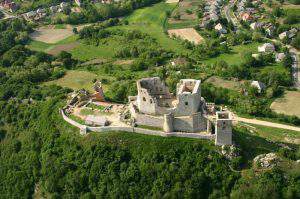
CSESZNEKI VAR CASTLE : WONDERFUL PLACES IN HUNGARY #1


So, you don't know if you will ever be able to travel on a plane or ship again, and your plan to go to Hungary is put aside as you, like just about everyone, fear what's going to happen next.

The next several summer 2020 posts are about places you might want to visit in your dreams, or some time in the future when all is well.

cseszneki vár Castle of Csesznek

 Image from Daily News Hungary and the Hungarian tourist bureau.

WIKIPEDIA - CASTLE OF CZESZNEKI


The castle was constructed after the Mongol invasion of Europe around 1263....  Built by Jakab Cseszneky of the Bana clan....  In 1315 the Csak clan conquered the castle.  But in 1391 King Sisismunch gave it and 31 surrounding villages to the Garai family.....  Then Matthias Corvinus donated it to Stephen Zapolya....


Click on the label Wonderful-Hungary to get to the entire series on this theme.

Tuesday, July 14, 2020

TOKAJ WINE MAP


I guess most of us have to just dream about visiting Hungary and traveling the Tokaj wine route, stopping at inns, testing wines in vast old wine cellars with ceilings covered in an important mold, becoming a little tipsy, and happily walking through the towns. But dreaming is a good way to set a goal.

Wednesday, June 17, 2020

THE 1828 HUNGARIAN PROPERTY TAX CENSUS : CLASS - STATUS - IDENTITY : HUNGARIAN GENEALOGY PRO TIP #5

THE 1828 HUNGARIAN PROPERTY TAX CENSUS : CLASS - STATUS - IDENTITY : HUNGARIAN GENEALOGY PRO TIP #5


Genealogically, I use the 1828 census when trying to break through some brick walls, searching for the names of people who were adults in 1828 on this census. Then I try to find the same people in the church records for the same settlement. I also use this census to get more information about individuals and families, to better imagine their lifestyle which was highly depended on class and status. 

Your ancestors may also appear on the Urbarium 1767 - the census that I wrote a lot about previously. Or you may be able to go forward to the 1868 census.  If you're seeking Jewish ancestors, there are also special Jewish census to cross-reference. 

Just remember that this 1828 census is a census of people who are considered taxable - land owners.  The economy is mostly agricultural but your people may not own the land they work on!  Land includes the patch of land that someone owns a home on and vineyards which might be at another location or shared among family members.  

Let's say you found someone on this census who looks interesting. You're going to go to church records for that same habituation.

Let's say you locate someone in a church marriage record who was born in or before 1828. On some records the place that a bride and groom are from (or born) is listed. Some not. If you find the bride or groom (or both) listed with other locations, you want to check that other settlement in 1828 as well.  

A person is listed on this 1828 census as head of household so chances are he or she is an adult. Although it's possible they are teenagers due to inheritance and/or being orphaned, if I see there are 2 "productive" adults at a location, knowing that few people live to be very old, I start out by figuring that it's probably a married couple. Their children are not listed because they are not considered productive or they don't have any yet or they have left home.  I figure that the head of household was probably born about 1810 or earlier.  I might try the surname in a genealogy database such as FAMILYSEARCH along with the location (being careful that records now titled with SLOVAKIAN SETTLEMENT NAMES were once HUNGARIAN SETTLEMENT NAMES) and ask for BIRTH/BAPTISMAL records for years 1750 to 1810. This may bring up one candidate or many. 

More often, because most surnames are common, and it seems that as you get nearer to 1800 the records seem to be less informative and sparse, what you may find is the names of people in a settlement who could be the parents or grandparents of children born to them. 

My experience thus far is that however far they may travel to marry or live, the bride and groom seem most often to be of the same status. For brides this means living an entire life at the status level they were expected to live when they were born, which is their father's status.  This is because noble women who married down did not pass their class or status on to their children. Never the less, I believe that they and their children were given more respect in a community.

Despite the social and cultural restrictions imposed upon people because of their birth class or status, you can get a feel for who may have married "up."  Or "down."

This census takes place in feudal times. Therefore on most records from this feudal era, a mention of the person's status is made on all records

You may live your entire life as it was expected to be when you were born including having a limited number of potential marital partners. How could your status change?

Being the especially good "familiar" of a kind and generous nobilis - one who still holds land and is considered rich - might help you stash a little coin away for a rainy day. Bad luck might mean that your house or village burns down and you loose everything but people will still acknowledge who your ancestors were. Crop failure could do you in and take the entire village down. You might show yourself to be especially loyal, valiant, or efficient in a military action and become favored and given the gift of noble status or land. Maybe you're an especially beautiful young woman with natural graces and you get noticed by a man of a slightly higher rank than you whose proposal prevents you from accepting the hand in marriage of the boy next door. Maybe you are a noble woman who has an affair or is raped and you have an illegitimate child but if you're willing to marry a man of lesser status at least you'll have a husband and a roof over your head. Perhaps you become an esteemed priest or member of the clergy or join a monastery or nunnery. (Doing so may prolong your life!) Or maybe you're one of the few who manages to live into adulthood, with many children surviving, and into old age your descendants make sure you always have enough and more.

Here's another scenario.

Notice the surnames and relationships. How does a person with Subinquillis status, who has no animals, no vineyard, no orchards or forests or meadows, no house EAT?  They are not going to beg money at the intersection and then go buy fast food. They probably can't afford to dine out every night. Chances are they are related to another family with a higher status or more money such as being the younger brother of the wealthier person.  They probably show up at the old main house for meals. Of course we speculate, but if the speculations lead to a research path that provides certain proofs we can entertain it, if not accept it. Why would this person who seems to have nothing even be on this census?  Perhaps he is a craftsman or in business and owns a studio or a hut.  He is not a serf or slave or sharecropper renting land.

Building the families through births and marriages, also look into DEATHS. Knowing who is ALIVE in 1828 helps you match the names on the census. A recent death might result in someone else owning the house or land.

Using church records against the 1828, I found a young couple, married at 18 listed as servants, in a small settlement.  However, at the birth of their third child they were listed as Subinquillis, and after their fifth, as Inquillis. I believe the status change came with inheritance.  Of the several men listed on the 1828 with the same surname, one of them had the same GODPARENTS for his children as the man listed as being in the Commune/Colony, although of lesser status.  I consider that these two men are related, pending more research, likely the younger is the one with a lesser inheritance.

This post is part of a series.  To bring up all posts click on the tag: Gen Tips : 1828 Hungarian Census

C 2020-2025 Magyar-American BlogSpot All Rights Reserved including Internet and International Rights

Sunday, June 7, 2020

THE WONDER OF AMERICAN FOOD BANKS - THE CORONAVIRUS-19 EXPERIENCE

So, I'm in frequent contact with a senior I admire, someone who is very picky about what foods she eats.  She can afford to be picky.  On the way over to visit with her, I saw some tents being set up near a school.  Since in California there has been a move towards homeschooling or learning by virtual contact with a teacher and classroom, this same location was where hundreds of laptop computers were given free to students.  I stopped to ask what was going on and it turned out the place had been selected randomly for a major food bank in Los Angeles to give away food because they had "too much."  I was told that this food was not the usual cans and peanut butter.  They had produce.  I decided to accept some food to take to her.

This is what was in the boxes they gave me.

Onions - no brand

Apples - no brand (we assume Oregon)

Nectarines from the FAMILY TREE FARM in Reedly, California

Carrots from FRUTIA - KERN RIDGE GROWERS, Arwin, California

Celery from FOXY USA - Nunes Company, Salinas, California

Potatoes from IDAHO FRESH in Menan, Idaho

Lemons from BELLE OF PIRU, Fillmore-Piru Citrus, Fillmore, California

Strawberries from BEACH STREET FARMS, Watsonville, California

Lettuce from GREEN GIANT, Chuck Brothers, Salinas California

I was AMAZED.  I also worried that the reason that there was so much produce donated or purchased by some entity of our United States of America government was that these things were going to go bad if they were not soon eated.  My friend outright refused the strawberries, saying that they were on the top 20 list for foods that hold poisons and should only be eaten if organic.

I'm APPRECIATIVE.

The celery went into a soup heavy with celery.
The carrots into another soup, heavy with carrots.
She used the lettuce because it was Green Giant.
The nectarines were out of this world delicious.

How WONDERFUL - for now - that so many people are going to food bank giveaways in order to stay in ever shrinking budgets.


C 2020 Magyar- American BlogSpot

Wednesday, June 3, 2020

HOW ARE YOU COPING WITH THE CORONAVIRUS-19, PROTESTS - LIFE?

Comments is on.  How are YOU?

I'm OK, but I realize this is situational.  I currently live far from the protest centers  where violence and mayhem have ruined, in my opinion, the peaceful protest which was supposed to be called for by the BLACK LIVES MATTER movement.  The destruction is abhorrent to me.  I believe these destroyers are criminals and there aren't prisons enough for them.  I don't want anyone like that in my life. 

I'm relatively safe. This doesn't mean I'm not concerned.  I live in a multi racial and multi ethnic neighborhood and I worry that suddenly it won't be peaceful and safe here. Some people in the area have resisted covering their nose and mouth with masks, which I sensed was a protest earlier.  I hate wearing one but I do it. 

I also read about what's happening in Hungary - as well as Poland and Slovakia. 

In general, currently, Hungary, Poland, and Slovakia, are much more conservative countries than the United States is.

What is conservative or liberal is a question, I realize. I consider myself to be a person who tries to see all sides and tends to be moderate - liberal on some issues and conservative on others. 

In general the United States does accommodate more diversity and has more prosperity.  That said, the United States has not experienced World War I or World War II on it's own turf and is not struggling to maintain a national identity. 

Back in the day, I used to overhear American who considered themselves to be Patriots, respond to destructive people, by saying "They should go back where they came from" or "If they hate America so much, why don't they leave - find some other country that will take them?" 

That is easier said than done.  Most people don't have so much mobility.  And no country wants incoming criminals.

How can you peaceably speak up for yourself, your people, and help guide your country the right way, if you aren't running for political office yourself?


VOTING is something that so many people neglect to do.  This year we celebrate the fiftieth anniversary of the right to vote for women in the United States.  It was fought for and yet so many people don't bother. The turn out for some elections is a bad joke.  This is a basic right, a basic way of making your needs and opinions heard.  It takes some research and some thinking to decide who to vote for if you do not wish to be dictated to by a political party preference.  As you know if you read this blog, I was/am a Bernie Sanders fan. He left the campaign and Joe Biden is the default Democratic candidate. It's my guess that he will chose a woman as his running mate and I suspect she will be Kamala Harris of California. It would be the politically-correct thing to do, although I hope Biden will make his choice based on a person's ability first.

For those of you interested in African American (Black) voting rights in the United States, here is a good history link: 15th AMENDMENT - AFRICAN AMERICAN VOTING RIGHTS

Wednesday, May 27, 2020

THE HU : WOLF TOTEM : MONGOLIAN INSPIRED MUSIC


Hello, some of you are wondering why I posted this video when the song is a modern recreation of a song that the invading Mongols, tribes lead by Genghis Khan, might have sung. I think it has a place here at Magar-American because I know that some present day Hungarians, and Hungarian-American's have some Genghis Khan DNA. Most of his DNA, by the way, is said to have come from descendents of the women in his harem, and there's speculation on just how often it is that the soldiers got around to raping, or settling and taking a bride, but as we know, the origins of the Hungarian language and culture are speculative.

Friday, May 22, 2020

THE 1828 PROPERTY TAX CENSUS OF HUNGARY - PROFESSIONS and CROPS : HUNGARIAN GENEALOGY PRO TIP #4

THE 1828 PROPERTY TAX CENSUS OF HUNGARY - PROFESSIONS and CROPS : HUNGARIAN GENEALOGY PRO TIP #4

By reading the village or town information on this census, you get a good idea about how small or large it is, how populated, how many people have enough to live in their own little house or big mansion.  You will see if the village or town has a number of craftsmen who specialize.  Tailors, Weavers, Shoemakers, Coopers, Wagoners.  Mostly you see a lot of FARMERS. If you see one of the farmers in your heritage on this census, you may also learn if he grew grapes or rye, lentils or peas, apricots or apples.


Here are some popular professions:

priest - pap

nun - apaca
carver - farfarago 
gazda - farmer
szabo - tailor
takacs - weaver
cipőkészítő - shoemaker
kadar - cooper
kocsi készítő - cart maker
lo edzo - horse trainer
lótenyésztő - horse breeder
katona - soldier
kereskedő - trader
közvetítő - negotiator
borkészítő - wine maker


Here are some popular crops:

garlic - fokhagymaseeds 
nuts - magok
sunflowers - napraforgók
tomato - paradicsom
peppers - paprika
chilis - chillis
barley - árpa
rozs - rye
búza - wheat
maize - kukorica
peaches - őszibarack
apricots - sárgabarack
apples - almák
pears - körte
almonds - mandula
grapes - szőlő
beets - celka
potatoes - krumpli

This post is part of a series.  To bring up all posts click on the tag: Gen Tips : 1828 Hungarian Census

C 2020-2025 Magyar-American BlogSpot All Rights Reserved including Internet and International Rights

Tuesday, May 19, 2020

PANDEMICS? THIS LIST IS ENLIGHTENING!

DAILY NEWS HUNGARY - TEN DEADLIEST PANDEMICS

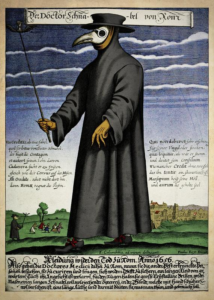
Black Death, plague doctor, Europe, disease, pandemic

The Black Death is still the worst pandemic to ever hit Europe but I had no idea there were other population devastating plagues before it.

All of us alive today have been born to a heritage of people who didn't die from these pandemics that killed off millions without first reproducing.  Sometimes I do wonder if this is nature, or the earth as a living being, shucks off humans when there are just too many people.  Sorry!  I'm not ready to die.  Not ready to go!  I don't want to kill anyone with my presence and I'm so tired of wearing masks and being so isolated.  But sometimes I do wonder.  Certainly climate change - unexpected weather patterns - and crop failures - starvation and malnutrition - make a person more susceptible to any illness.

EXCERPT: Europe needed 150 years to recover from losing 20 million people.  The Black Death entered Hungary around 1349.


A popular image of the plague was this!  Hey, have we started making masks that look like birds beak? Or is this a version of "The Grim Reaper"?

I now realize that my genealogy, one line that has the potential to go back to the 1400's, may be effected by deaths from Plague.  I already know people in my lines died of smallpox, of TB, of child-birth, of long illness, and in mysterious ways. I have seen the documents where a priest writes in cholera - plague.  But maybe someday if I endure and am lucky I will find the provable link to that potential ancestor who lived in the 1400's.  Maybe I will find that some of my ancient relatives died of Bubonic Plague.

C 2020 Magyar American BlogSpot

Sunday, May 17, 2020

THE BLACK DEATH (BUBONIC PLAGUE) IN HUNGARY

Watching the Black Plague video "Return of the Black Death" made me wonder how people living in Hungary survived during the early 14th century when England was so devastated.  This article from WE LOVE BUDAPEST is quite intriguing.  WE LOVE BUDAPEST : HISTORY OF PLAGUES IN HUNGARY.


Excerpt: Thus, in search of reasons, contagion was considered a divine judgement on people's sins.  Extreme solutions to this were found by the supporters of the flagellation movement, who, during the first plague of 1347-53, wandered around communities enmass in apologetic self-thrashing to put an end to the epidemic.  This happened across Hungary and the rest of Europe.

Wednesday, May 13, 2020

MUCHA DRAWING #45


The painting is from Dover Publishing.

EXCERPT: ALphonseMaria Mucha (1860-1939) was a Czech Art Nouveau painter and decorative artist, most well known for his images of women.  He produced many paintings, illustrations, advertisements and designs.  He was born in the town of Ivancice, Moravia (todays region of Czech Republic.)

The site is comprehensive.