Showing posts with label Slovak Genealogy. Show all posts

Tuesday, August 27, 2019

GO TO DIGITIZED MICROFILM - STOP WASTING TIME - BE SUSPICIOUS OF UNPROOFED FAMILY TREES : USING FAMILYSEARCH FOR HUNGARIAN GENEALOGY RESEARCH - STRATEGY #8

GO TO DIGITIZED MICROFILM -  STOP WASTING TIME - BE SUSPICIOUS OF UNPROOFED FAMILY TREES : USING FAMILYSEARCH FOR HUNGARIAN GENEALOGY RESEARCH - STRATEGY #8

How do you find which of many parental candidates, all those common names, for your ancestor are the right ones? 


I posted about this a while back but allow me to go into more detail. To recap, I mentioned that when recreating families with common names in the same location we notice if there are births indicating overlapping pregnancies such as the same couple seemingly having two babies within a year. We know it's possible but not likely that a woman is going to have two pregnancies in a year. We have to be careful also that we don't think an individual woman has had, say, 16 children over 40 years; it can happen but it's probably two women with the same name.  House numbers and the names of Godparents and sometimes the witnesses to marriages can give us clues.

Recently on FAMILYSEARCH I linked to someone else's research that was just aweful. I'm about ready to contact FAMILYSEARCH and tell them this person's contributions to the site are sloppy, unproofed, and deceiving, but as I read it, once it's up it's up.  I found he had put up whole family trees (which remain if he quits his free membership) in which he had parents of the same name and over ten children and the dates would indicate that the mother would have been giving birth for 30 years. Even if they traveled around Hungary having children, he offers no marriages, no deaths. It would take hours to check his work.  AND I DO NOT LIKE IT THAT ALL THESE PEOPLE HAVE BEEN GIVEN ID NUMBERS : I DO NOT WANT TO CONTRIBUTE TO THIS OR HAVE ANY OF MY RESEARCH LINKED TO ANY OF HIS as these ID NUMBERS will then MERGE THE WORK.  SOMEONE FOLLOWING MY professional standards RESEARCH WILL BE FOOLED BY HIS sloppy work!

When using FAMILYSEARCH for Hungarian/Slovak genealogy note that the red link - the "fine print" for searching the INDEX encourages you to think that the FAMILYSEARCH DATABASE of Hungarian or Slovakian church records is comprehensive, it's not. IT SHOULD SAY "The BAPTISMS are INDEXED" not that the (CHURCH) RECORDS are. (Even then there are images not available for some films for whatever reasons and though it's implied that the original film was index but then withheld or lost or some governmental privacy issue has emerged, TRY THE LOCAL ARCHIVES IN HUNGARY.) This misinformation is really sloppy on the part of LDS/ FAMILYSEARCH considering that their aim is to dominate the provision of genealogy/historical records in this world.  

You need to look at the images from the film whenever available. You need to find the MARRIAGES, DEATHS, REMARRIAGES and if at all possible read/translate the notes.

Here is how I get close to the record I need without wasting hours on end though I still wish I had the time back used to get closer to the information I need.


Let's say I have reason to believe that an ancestor I'm looking for was born in a certain location; maybe it wasn't transcribed right, maybe the surname was totally screwed up by the person who originally hand wrote it, or the indexer didn't know what they were doing,  It's just isn't coming up no matter how I play games with letters and so on to bring it up.

I want to get to, say, 1849 and that place on the microfilm.

By first going to the film number and then searching for ANYONE born in 1849, I get to that part of the film, which saves me time.

Alternately, going to the film number will bring up an option to see many small blackish squares. Some of them will clearly look like start pages because they have more white on them. Click on those to find where you are. It would be helpful to know on which image death collections or marriage collections within a film number start and end without even having to waste time scanning like this.  Sadly the only way to do that is to scan the film since the BAPTISMALS, MARRIAGES, and DEATHS will probably not be by year but by category and then year.  So if a film has 700 images, I go to 350 and see what's there.  I might go to 100 and see what's there.  To 550 and see what's there. I take notes for the next time I go to that film.

You want to see if YOU agree with the indexing. (A recent update at FAMILYSEARCH that has the potential to really screw things up is the ability for ANYONE TO EDIT a name!  Read the edits carefully and go to the original to see if you agree. I've found a number of surnames listed incompletely. Sometimes if the name is a long one, and the person who was handwriting paused to redip into the inkwell and took a pause between parts of the name, the indexer didn't know what they were looking at and the name is missing parts. I've found a number of the suffix szke separated from the beginning of the surname. 

Consider that you could have ordered a microfilm back in the day, payed for it, waited for it, rushed to the closest Family History Library upon hearing it was in, and rolled the microfilm page by page, because the loan was only going to be for about 10 days. Yes, you have gratitude that this information is currently free. Still, you have to hone patience. 

Remember to take breaks to rest your eyes, stretch, drink some fresh water or hot tea.

Once you have your film number and start scanning, write down the image number ie. image 68 or 675 as a example - to return to it later. There is a SOURCE BOX feature. I've noticed that when using my cell phone to save some of the information is not saved though it said it was. Luckily you can delete records held in SOURCE BOX.

I recreated a large family group but with a six-year gap of births. While perhaps in those six years the couple didn't have any pregnancies or went through early miscarriages, I went into the film and looked at that six years and sure enough, there was the person I was looking for - a sibling who did not come up probably because of one of the previously mentioned issues of transcription.

Go to deaths and marriages and scan each page especially if a person was a widow or widower at remarriage.  Very likely there are half siblings, step siblings, or some other evidence of BLENDED FAMILIES. The reason so many people in a village collaborated with each other for childcare was that they were often interrelated!  

When you have MANY candidates to be the parents of a child, some in the town of marriage, some somewhere else, you have no choice but to develop multiple family groups in order to eliminate some of them.  By understanding who married, who died, and when, you'll see blended families emerge. I'm working on several surnames where this is the case.  In my own family at least two marriages per person due to the deaths of women who bore many children is common.

I just translated a death record that said, "I do not know why this person died." His wife had died less than a year earlier and young. The couple had also experienced the death of one twin. I even wondered if he committed suicide!  I find this to be an unusual statement, one I don't see repeated.

One of my ancestors experienced seven of her siblings and their parent's death before she married. That left her with a brother and a sister.  She and her sister came to America.  When she married, she married a much older recently widowed man whose first wife had seven births, with four children left to stepmother - the first she no doubt played with in the school yard.

Few women in pre-1900 Hungary lived long enough to experience menopause, most experienced repetitive childbirth throughout their adult lives and I think it wore them out. 

Most widowed husbands remarried and often quickly and pragmatically.

Infant mortality was high, as many as 2 out of 3 children were orphaned before they were adults. Parents experienced the deaths of their children. Siblings experienced the death of their siblings. The priest must have been busy.  Was there time for grief? Funerals were frequent. TB, smallpox, cholera, typhus, infections, broken bones, childbirth, and many diseases we have conquered or gotten control of (such as the "long illness" of mysterious cancers), were equal opportunity with no respect for status or wealth. (Go get vaccinated!)

I recently read that the Black Plague killed so many people in Europe that people started being less status-driven when it came to remarriage.  That mixed the genes. (The Black Plague did not affect Central and Eastern Europe as badly as it did England.)

If you identify as a Hungarian or Hungarian-American, consider this. You are alive today because your ancestors managed to reproduce with all these threats to their lives. They lived long enough to reproduce despite plagues. They also, depending on where in Hungary they were, managed to reproduce though (estimated up to) half the population was killed by Mongols circa 1241 and then two thirds had been killed by the Ottoman Turks by 1568. 

And now we have to put up with people who think some of us came from "Draconian Caves" or are "Reptile People."

C 2019-2025  Magyar-American BlogSpot 
All Rights Reserved including Internet and International Rights
This post is part of a series.

To bring up all posts in the series, click on the tag GenTips: Hungarian- FamilySearch  

Thursday, August 22, 2019

THAT ORIGINAL HORRIBLE HANDWRITING and the DATABASE INDEX : USING FAMILYSEARCH FOR HUNGARIAN GENEALOGY RESEARCH - STRATEGY #7

THAT ORIGINAL HORRIBLE HANDWRITING and the DATABASE INDEX :  USING FAMILYSEARCH FOR HUNGARIAN GENEALOGY RESEARCH - STRATEGY #7

If you use databases such as FAMILYSEARCH and you go to the original microfilm/books you know you've got to deal with the handwriting - the penmanship, the loop de loops, the exaggerations, the abbreviations, the ethnic variables of forming letters, while trying to come up with ways to bring up on the database Janos, as Johannes, Johan, Jo., John, Ivan, and so on.  I found Julianna, Julia, Julis, and Ju - or was that Iu? (And there are ethnic variations such as Illya!) You definitely should try ethnic variations of the name and nicknames. And then there are the surnames. 

So, you make a list. (Is all this database search tweaking fun?  NO!)

If the name does not come up with the proper T. Try spelling it with an I. with a Y.  (I had a T come up as a G!) 

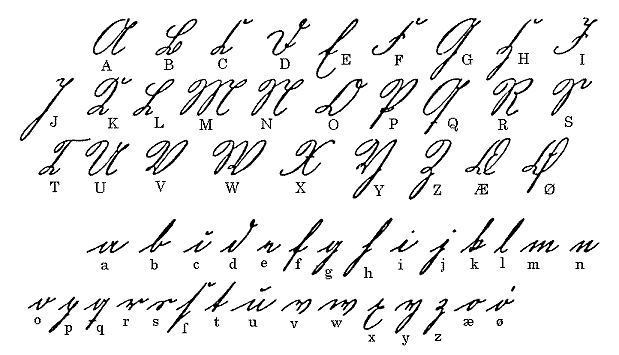
Is that Y or a U?  Below is the GERMAN 1890 "perfect penmanship" called Kurrent, from Wikipedia. Hungarian children were going to school and learning to speak, read and write German.

Image result for Deutsche_Kurrentschrift

The best thing to do is find yourself a patch of the same handwriting on the same document and look for words that you are guaranteed correct, such as the word for BAPTISM, or the way the MONTHS are written, or the often elaborate headings.  Look for how that particular person who hand wrote it forms their capital letters and so on.

But also check Hungarian surname lists which are available on web sites featuring surnames from current phone books, as an example. For instance, there has been confusion on databases and elsewhere between the handwritten names TAKACS, TAKATS, LUKACS, LUKATS, FEKETES, LAKATOS.  Knowing the MEANING of the surname may help somewhat.   (Weaver, Luke (There are surnames relating to the writers of the New Testament/Bible Mathew, Mark, Luke, and John), Black, Locksmith.)

Also, as an example, I see the same family surname TAKACS written TAKACS, TKATS, TAKACH, TKACH, TAKAS, though some families brought forward one of those spellings as their official spelling and another did not, sometimes it IS the same family.  Again, by building the family in the same town you will note that you may have to search for ALL the variations in order to find what you're looking for. The same family can have their name spelled one way in an area that is highly populated by Slovaks but when they live in Hungary surrounded by Hungarians, another. (The variation may or may not indicate an ethnicity.)

Good news.  You can scan the FAMILYSEARCH using * not only at the END of a name, but at the beginning of the name.  Up to three * at a time. So try *szke  or  *szk* or even this: T*k*c* Eliminating vowels helps since these can appear inconsistent.

Another thing for which the * search is useful, is the change of endings of surnames in Hungary and Slovakia.  The SZKI turned into SKI or SKY, the TH turned into just T, the LAI turned into LAY or LEY, and the DRAI, turned into DRA, DREY, a AI at the end of the name, turned into I, Y, even IY.

Also, notice that the letter s is written as f (and visa versa). And the letter j is often turned into a y.

C 2019-2025 Magyar American BlogSpot  All Rights Reserved including Internet and International Rights.

Please credit me when using this information. It's hard won for me and good karma for you!

To pull up all posts in this series, click on the tag GenTips: Hungarian- FamilySearch  

Wednesday, June 19, 2019

STARTING in JULY - USING FAMILYSEARCH for HUNGARIAN and SLOVAK GENEALOGY


USING FAMILYSEARCH for HUNGARIAN and SLOVAK GENEALOGY

Summer has begun and though I'm also enjoying the warmer weather and the beauty of nature and indulging in other pass-times, I'm hot on my genealogy. 

I've already handwritten the posts about using the popular FAMILYSEARCH for Hungarian genealogy and have decided to start typing and posting them in July - August 2019. (I think by then I will have exhausted my Hungarian Urbarium 1767 experience / advice to my readers, but one never knows for sure...)

I know some of you who read MAGYAR-AMERICAN BlogSpot are also hot with your Hungarian and Hungarian American (and Slovak and Slovak American) genealogy projects. Maybe I can help. You see, I've spent more than five hundred hours using the FAMILYSEARCH databases and let's face it: much is to be desired.  It's my hope that somebody out there whose involved with FAMILYSEARCH will hear our collective call, so I do hope some of you will leave comments.

As a bit of background for those new to the research and those of you who, like me, have been stalled due to "unavailability" of records, I began my research so long ago it was pre-Internet. It was pre-Databases. It was using books and microfilm to document family stories - oral tradition - some of which proved to be not true. As a result, I know that there are massive gaps in what is presently available when it comes to indexing projects.  (UPDATE July 23, 2019: I checked again and there is presently an indexing project for the Civil Registrations for BUDAPEST, meaning that if you searched in the Civil Registrations for HUNGARY before, it did NOT include Budapest, the Capital and largest city in Hungary.)


My understanding is that Latter Day Saints Family History Libraries - which are around the nation - some Kis - some Nagy - and the headquarters in Salt Lake City, Utah, decided to no longer send out the microfilms for loan. In the past we paid a reasonable fee for using the films and maybe it just wasn't lucrative to LDS, which is first a church with missionaries all over the world. Some of the films I used once. Some I used for weeks - months. But if, like me, you are not going to travel to Salt Lake to research there, then you're probably stuck needing to see what is on films that do or did exist, but which are not a high priority for them to make available. (Some Family History Centers have microfilms remaining in them that can be used if you go there. Some of the indexed films have images NOT available.)


So I'm going to share what I've learned and perhaps model some strategies for you. Some of you may read my advisory and say, "I already knew that!" 


Of course, Hungarians are in Slovakia and Slovaks are in Hungary, as are some Croats, Czechs, Romanians, Ruthenians (Carpathian - Rusyn) ...  There were also colonies of Germans, Italians, and other ethnic groups. There were/are several religions; Roman Catholic, Lutheran (called Evangelical), Reformed, Unitarian, Greek Catholic, Jewish and so on. Borders changed and today Hungary is about one third what it was before 1920. (And I'm aware that the Hungarian population in Romania wants their part returned to Hungary.) 


In order to get to posts on genealogy here at MAGYAR-AMERICAN BLOGSPOT, you have three options. One, you can go through my archives one by one. (Doing so you will find plenty of non-genealogy posts and can learn about Hungarian society and culture.) Two, you can use the search feature embedded in the front page of the blogger to bring up posts using a term such as "genealogy." Or, three, you can click on the labels you see beneath posts; I really try to label in a helpful way. (For the set of advice particular to Urbarium 1767 click on Urbarium 1767).  For this new set of experientials, click on "Family Search - use of databases."


C 2019 - 2025  Magyar-American BlogSpot
All Rights Reserved including Internet and International Rights

This post is part of a series.
To bring up all posts in the series, click on the tag GenTips: Hungarian- FamilySearch  

Tuesday, May 12, 2015

ARISTOCRACTIC ASSOCIATION OF SLOVAKIA

ARISTOCRATIC ASSOCIATION OF SLOVAKIA (in English)  ARE YOU INTERESTED IN REGISTERING YOUR NOBILITY WITH THIS ANTI-COMMUNIST GROUP?   You don't have to be Slovak.  Just remember that American Citizens do not have titles, give up the right to titles upon citizenship, but you might ask if you can use them when traveling in Europe!

EXCERPTS

The registration in the Noble Register of the Aristocratic Association of Slovakia accepts the strict rules of noble traditions. It is possible to make registration only after presentation of complete prescribed documents (genealogical and historical), which confirm the appurtenance to the noble status. On the other hand, Ministry of Interior of the Slovak Republic officially approved the Statute of the Aristocratic Association of Slovakia, with the right to certify and confirm the justness of using the noble titles. The Certificate about the noble origin, issued by our Association, is accepted by democratic administrative system and its authorities.

Today we are the only noble organization in the east European countries, which has established and carries the Noble Register. This has brought us the attention of many aristocrats from different European countries, especially form the post-communistic countries. They ask for the confirmation of their nobility through the registration in our Noble register, or they ask for help or advice. So it is happened, that our Association incidentally has got into the function as a central co-ordination workplace for the question of renew of the noble status.

A last point we would like to mention is that the Aristocratic Association of Slovakia is relatively small organization. Today we have about 40 members, 17 of them are registered in our Noble register. The others provide the necessary genealogical documents step by step, and they are in the waiting period. The candidate cannot use his noble title before the registration in Noble register.

Tuesday, July 22, 2014

SLOVAKIA GENEALOGY RESOURCES : A GREAT WEB SITE FOR GENEALOGISTS WORKING ON TERRITORY PRESENTLY CALLED SLOVAKIA

IABSI - SLOVAKIA GENEALOGY RESOURCES

FROM THE SITE: "My geographic focus is on Eastern Slovakia (Slovak Republic) / formerly Czechoslovakia / formerly Upper Hungary.  Primary research areas include the peoples and lands in the Carpathian mountains and immediate borderlands of Southern Poland (Galicia) and Western Ukraine (Carpatho-Rus).  As Slovakia was a component of pre-1918 Hungary, much information about "old Hungary" is contained herein and will be useful for any pre-1918 Hungary research."
***
This sight is a great place to look for small settlements in relationship to larger ones so that you can mine the 1869 and other Hungarian Census (which in the LDS catalogue is under Slovakia). The idea is to find that settlement's municipality first.

Apparently the full census of all the counties of 1969 Hungary are not filmed and/or digitalized to be used on databases or the Internet.  However the 1869 census can be very important in your research because the SURNAMES are given (including the maiden surname of wives different from their husbands), birth years, occupations, and a list of occupants of a dwelling including grandparents, boarders, farm help, and so on.
I have to admit my own research is stuck here.  I'm looking for a male who says on his naturalization that he was born in 1847 but who on census and marriage records seems to be taking a few years off his age.  So he was born say anywhere from 1847 to 1850.  (Though it was common for 40ish widowers to marry town "spinsters" (women not married by say, 22) he seemed rather determined to be only 38 when he married a second time.

I looked to find his village on this site and it was identified as in the Bodrogkoz municipality.  However, using FamilySearch, there were only about 43 images counting maybe about 12 family groups, none who had his surname or any other surname I associate with the family.  Which means that he might have been born in the area about 20-22 years earlier but there is no sign of them right there.  Maybe another village in this same county?

Further I think, based on a deep analysis of house numbers in the small town in which he lives the rest of his life until coming to the U.S., that he did not get to that town until about the same time, 1869.  In 1869 another family is living in the house and I don't see any relationship with them.   He could be there living in but there is no record of him until his first marriage on church records. It's as if he moved to begin working as an adult in another town just when the census was happening...

This one takes patience, travel, synchronicities, or acceptance of a brick wall.