Showing posts with label GenTips: Hungarian- FamilySearch. Show all posts

Sunday, September 8, 2019

MAKE TIMELINES FOR EACH OF YOUR ANCESTORS - WHAT WAS THE EFFECT OF PANDEMICS? STRATEGY #10

MAKE TIMELINES FOR EACH OF YOUR ANCESTORS -  WHAT WAS THE EFFECT OF PANDEMICS?  STRATEGY #10

I'm a believer in doing TIME LINES for each individual on your chart. Start a page when you find a record of the birth/baptism and add to it as you discover the birth of siblings, the death of parent's, remarriages and so on.  It helps to understand their individual lives.


The timeline begins with Birth and Baptism.

It can include First Holy Communion, or Confirmation, the Conversion to another religion.

It can include Military Service.

Marriage, and the birth of siblings and children that change the size of the family, and their Deaths.

The Remarriages, and thus the Step Parenthood.

Education.

Travel to another country - emigration or immigration.  What was their motivation?
Ship records - the name of the ship - what it looked like - what their voyage was probably like.
Naturalization Records - always great to have.  If you're just starting your genealogy for Industrial Era Immigration, the World War I draft registration (which included men who were not yet citizens) often has details such as the town or village and country the man left.

You also want to include:

Important times in History they lived through. Locally and in the larger world.

Do some research around these events.


For instance, were your family members involved in any Uprisings or Military Action, any Politics? 

Were they refugees?  Were they relocated?  Did they flee?


Sometimes this is a way of weaving family oral histories into your research and proof the oral histories.


As you add to the timeline, you start to get a feel for your ancestor's life. This is a much richer genealogy for her than charts that seem to only be about a person's direct genetic lines. You may also notice how long they lived, what they died of, and of any genetic patterns emerge.

Earlier I mentioned that if you are Hungarian or Hungarian American, then your ancestors managed to reproduce despite the population being decimated by invaders who killed off much of the population repeatedly.  THEY MAY ALSO HAVE BEEN SURVIVORS OF EPIDEMICS!

For instance, in about 1831/1832 I started finding a large number of illegitimate births in a particular small town.  Knowing that this was taboo, often resulting in a lowered status at a time when status was important and the way communities were organized, and also often resulted in higher rates of death for the children of a single mother, I wondered what had happened? Had the women been raped? Of course I can't know if they were or not - maybe I tripped across a town where people took to the woods and had an orgy - but then I learned that about this time CHOLERA was making its way through Europe and it was so frightening that a person could take ill suddenly in the morning and be dead by afternoon, having been perfectly healthy. Their vomiting was so intense that victims turned blue and then they dehydrated seriously causing organ failure. My suspicion is that there was so much death, so many graves being dug and so many funerals, all the while not knowing if you were next, so much fear, that many people responded to an instinct for life and had sex.

By the way, the tradition in Hungary is that BAPTISMALS and FUNERALS were for immediate family but WEDDINGS were for the village.

HISTORY CHANNEL ON CHOLERA PANDEMICS.

How did your family make it through the SPANISH FLU PANDEMIC of 1918, which took about 500 million people to death, more than died in World War I? 

SMITHSONIAN - HOW THE SPANISH FLU WENT AROUND THE WORLD
EXCERPT: The toll of history's worst epidemic surpasses all the military deaths in World War I and World War II combined. And it may have begun in the United States. 

I read this on one site: The Great Plague of 1738 was an outbreak of the BUBONIC PLAGUE between 1738- 1740 that affected areas in the modern nations of Romania, Hungary, Ukraine, Serbia, Croatia, and Austria.  On another, particular to Great Britain and Plague, well it turns out that decimation of populations actually relaxed class barriers to marriage.

Include the Pandemics on your timeline even if your ancestor lived through them!

Also of great interest to me as we face climate change is 1816 THE YEAR WITHOUT A SUMMER. The sun didn't make it through thick volcanic ash clouds around the world (including the United States) and there was crop failures, starvation, people moving to warmer locations.  The people did not understand what was happening and some took it to be End Times.  FARMERS ALMANAC 1816 YEAR WITHOUT SUN 

C 2019-2025  Magyar-American BlogSpot  
All Rights Reserved including Internet and International Rights

This post is part of a series. To bring up all posts in the series, click on the tag GenTips: Hungarian- FamilySearch  

You can also follow along on other genealogy and family history posts about the Urbarium 1767, and there are a great number of useful links on the sidebar!  This concludes the series on using FAMILYSEARCH.  I will add to these posts with more information when possible. 


Saturday, August 31, 2019

OLD HUNGARIAN NAMING PATTERNS and ILLEGITIMACY - ORPHANS - SURNAMES : USING FAMILY SEARCH FOR HUNGARIAN GENEALOGY RESEARCH - STRATEGY #9

OLD HUNGARIAN NAMING PATTERNS and ILLEGITIMACY - ORPHANS -  SURNAMES :  USING FAMILY SEARCH FOR HUNGARIAN GENEALOGY RESEARCH - STRATEGY #9

WHAT'S IN A NAME?
 

My genealogy research experience shows that NAMING children, giving them a first name (also called a "given name") is very tied in with class and status in those pre-immigration Hungarian and Slovakian-held records. 


Yet one cannot assume that someone with a common name was considered to be a commoner. The father's status or profession is on those BAPTISMAL Records. If the mother was born a noble but the father is not, it will say so. This will be in evidence the further back from 1848/1849 you go and persists in many records forward of 1848/1849. On some records of the 1820's and before, there will be a record of status rather than profession i.e Nobilis, Subinquillis, etc. which can link you to that Urbarium 1767. 

For the average Hungarian - the farmers and craftsman and merchants and tradespeople - there seems to have been limited number of given names to use when naming the new baby. I've read that parents who experienced (and almost expected) that some of their children were going to die before ever reaching adulthood, the repetition of names was about the hope for a replacement child for the one who died. I think there was more tradition behind naming children.

For the high noble you will see the naming gets more exotic or original and it seems like the more names, the higher the status. For the average Hungarian you have Janos (John), Andras (Andrew), Istvan (Steven), Maria (Mary), Erszebet (Elizabeth), Anna (Ann).  If you find an Apollonia well, I've seen the name along with "illegitimate" recorded several times, but have also seen the name in centuries old genealogy charts. 

As far as an honorific name, it's usually that the first son will be named after a father, the first daughter named after the mother. However, the naming continues on predictably from there. The first son named Janos dies, the next son born will be given the name Janos. Ditto the first child named Maria, and so on. If you notice the same couple reusing a name that's a clue that you should look for the DEATH RECORD of the first children so named who died. 

Every once in a while I will see a Latinate mention that the son is a "Junior." This generally means the father with the same name is still alive.  As soon as he dies, Junior is no longer a Junior. If he has also named a son with his name, he is then the Senior and the younger is the Junior.

In Hungary two brothers who were born of different mothers - who were close - were called "brothers of a different mother."  Egy masik anya testverei.   

The commoner given names and order of names given are so repetitive I tend to think of them as Number One Son, Number Two Son, Number Three Son. Families that manage to have many children who survive into adulthood will start using more names but still, these names seem to be from the standard list. Zsuzsanna and Julianna and Rozalia may indicate that this child is a much younger daughter. But when you go into the records of wealthier, noble, you could say more worldly people, people who travel more, you find more diversity of given names, and a greater number of names for a child. Some of these names recall the Ancient Romans. Gyula (Julius) for an example, or Old Testament Bible characters (Ezekiel as an example.) 

The Germanic influence is that children be given more than one name from birth, usually two. This is a pattern that has become All American as well. Additionally, it's Germanic that a child might go through life being called by their middle or other name.

(The Ruthenians, also known as Carpathian Rusyn, have their own honorific naming pattern. A naming pattern can indicate an ethnicity.)

I notice that some Hungarian immigrants to the United States continued the Hungarian naming pattern. Others used the first original names in the family in hundreds of years for their American born!

After seeing so many single names on BAPTISMAL records, be careful when you see two names that you are not assuming it's one child with a first and middle name. Two sets of godparents are a clue if the priest has not written in a word for twins such as gemelli. (I found an indexed record for twin sisters that FAMILYSEARCH indexing has listed as one girl baby with two names.)

On occasion I see that the priest has written in that the child was "premature" and sometimes a death cross and date is on the record. Premature sometimes is included because the child was born close to the marriage date. Or the child was baptized by a midwife or someone else. Recently, one in which it was explained that a twin was born dead but the obstetrician baptized them both. That means the couple had means to have a doctor there at the birth which is unusual. 

Baba means midwife in Hungarian. 
Szulesz means obstetrician. 
Orvos means doctor.

Note that the BIRTH DATE is most often 2-3 days before the BAPTISMAL date in Hungarian records, but the baptismal could have been weeks or months after the birth. Sometimes a birth and baptismal date that is the same indicates the child was baptized right away because it was sickly or premature. Sometimes it was baptized the same day of birth because the priest made home visits or the chapel was down the street. Family members also baptized infants. The sacrament of Baptism was very important to Christians of every variety in the Old Country.

That the record is a "church record" does not mean the child was baptized in the building of the church. At a couple days old the parents might take the child over to the church but the child could have been baptized at the home in which they were given birth..  

Sometimes a family with means would take a child to the next town where the church was more impressive, the seat of the diocese, or simply had a larger seating capacity, and have a baptism there rather than their village church. Doing so was probably a little closer to our idea of Baptism today rather than the simple ceremony in a small village church or chapel.

Illegitimacy: If the record says the child is illegitimate but the a father's name appears this means that he has acknowledged he's the father. It's rare. Look for him in the records: The couple may be engaged and appear in marriage records later. He may just be a married man. (At the time the father's acknowledgement implied financial support and could also imply the child will have an inheritance.)

If there is no name - unknown father - well, as I have read about this - probably everyone in town knows who the father is - knows who has been meeting in the barn - or who has even raped a woman - the priest even knows - but cannot write that down.

Legitimacy was tied in with inheritance rights. It was a legal status and very important in a class conscious society. That the priest cannot change, no matter what his wisdom, belief, or feelings about a situation.  

Other notations I've seen about illegitimacy include a priest writing in that the girl - the mother - is a SERVANT.  I hate it but back in the day servant girls becoming pregnant by their employer or another man living in the house she worked in or around the farm were not uncommon. Sexual harassment in employment is not new. A servant girl was usually a young, innocent girl, an orphan or from a poor family. She had no defenders. She may have no inheritance coming - no dowry. Expectations that a poor girl would not resist the noble also came into play. The fact that people with small houses could have servants who lived in and slept across the room from the family and did not provide a separate room with a lock and key also meant unmarried sex.

Affairs: I came across one child marked illegitimate in which the GODPARENTS were a couple nobles : there's a story there. Also came across the mother of an illegitimate child who came from a rather noble family herself. More story. In wonderment I also located a noble woman who had seven illegitimate children!  Since they survived and seemed to have the usual spacing of a couple years apart (breastfeeding can prevent conception!) I call her "Someone's Mistress!"  Unlike the abandoned prostitute or sexually harassed and raped maid whose children usually died of starvation at a higher rate than usual (such suffering!) this woman was likely being supported by a man with another legitimate family, a noble, or baron. 

I have to wonder if the father was the Godfather and the Godmother knew it.

How many Godfathers were actually fathers and how many Godmother's knew it?

Did you know that the Old Country Hungarians sometimes had duels?

I think we all have notions that pre sexual revolution 1960's in the U.S. people were rather prim and proper and would not have sex unless married. But as I see illegitimate births on old records into the 1700's I ask WHY then? Little to no good contraception has something to do with it. 

A consequence of DNA tests versus good old fashioned genealogy is that affairs and rapes are revealed. 

One academic paper I read said that the better the times economically the more illegitimate children, the more children in general. Good crops, a good year for wine, more play! (I have to smile. I would rather these ancestors had moments of wild abandon than be unwilling participants of sex.)

In the church records I also see a lot of babies born to single women in the very late 1800's where the priest has written illegitimate "Father is in America." I imagine the promises made to wait and be sent for.  As you Magyar-Americans probably know, the streets here were not paved in gold after all. Our ancestors were a hard working people. Some of the men came to the United States to work in factories and then went back to Hungary to work in the fields for the summer. Some immigrant men - not just Hungarians - left their past behind including women they married - and started new families or were so ashamed of being unable to send money back that they disappeared.

In my own genealogy, I have an ancestor widower who married a pregnant noble woman who had been widowed during pregnancy. She was Lutheran. He Catholic. She is listed as Lutheran throughout her pregnancies thereafter. I wonder if they were having an affair before marriage or if he simply stepped up to be the father and man of the house to a pregnant woman. If a person didn't join the priesthood, the nunnery, the monastery and vow to celibacy, then they were married - and married - and married.  One paper I read said that three marriages was the official limit! (Let me know if you have evidence of someone who married more!)

Mention that the child is an orphan:  I've seen this on MARRIAGE RECORDS. In the 19th century though in Europe, an orphan was a child without a father - no one to support it - and that was part of the mentality that a child was owned by the father. However, if you see that someone is listed as an orphan, look for the deaths of both parents as it seems our more modern definition of an orphan as having no parents alive prevailed. Sometimes a remarriage of a parent is more subtle. One marriage record (circa 1802) says that Maria is the daughter of a man surname Sikora but throughout the other records her maiden surname is Simko. I'm seeking the death record of her birth father to proof this and a remarriage record for her mother. Sometimes if an unmarried mother died in childbirth or soon after the child is mentioned as an orphan on the BAPTISMAL record. We need to take the 19th century notion of an orphan into consideration and find the death records of the parents.

You may come across terminology such as FOUNDLING or BASTARD. My recent reading about illegitimacy in the 19th century and prior to this has clarified some things for me.  

A FOUNDLING was not necessarily also illegitimate and didn't have the same stigma. This was a child who was put out because the living parent(s) were too poor to care for it.  A foundling might be placed in an orphanage run by a convent. The infant didn't necessarily have to be exposed to the elements to be found. On the church steps would do. The idea was that the parents hoped someone would find it and keep it. 

I once read about a hospital in 19th century Paris that actually had anonymous infant drop off, sort of like our Legal Surrender Program in California. There was something like a revolving door on the outside of the hospital where a baby could be placed. Here in California, a desperate mother who cannot care for her child can walk into a fire station and drop it off and will not be prosecuted, unlike those who do throw a baby in a dumpster or on a roadside. Moses of the Bible was a Foundling. 

No doubt about it, an illegitimate child had status only higher than a slave. Illegitimate children tended to 1) also have illegitimate children 2) die at twice the rate as children born into a marriage, usually because the mother was too poor and alone in the world to feed it or had been abandoned or disowned by her family - so sad! 3) marry each other since they had the same status.

As a result of giving into wild abandon or being seduced and abandoned or raped and left devastated, a woman who had a child without a husband to support it lost her status. Her options for marriage were not so good. People who did not follow the custom of marriage first were suspected of being irresponsible because they had not thought of how they would keep their own offspring alive. I suspect that this may account for some noble women who had a child without a husband being married by commoners. As I understand it, and I suspect this may have depended on exactly when or where it happened, a woman who was born noble but married a commoner did not confer her status on her children. (But a father with no sons could give his daughter or daughters an inheritance.)

A bastard was defined as a child whose parents were not married at the time. We now say illegitimate, if we say it at all, to mean any child whose parents are not married to each other, whatever their marital status is. The priests tended to use "unknown father" rather than get into the details, but I've heard that some other researchers have found notes such as "child of the saddle" (!?!?!)  Actually that terminology indicates that the father passed through town as a soldier or other man on horseback - a traveler.

A child who was born a bastard or illegitimate as their legal status could become legitimate and able to inherit through the marriage of its parents later. Or, if the father had no other MALE HEIRS, he could chose to legally admit to his fathering, recognize the son as his own, and then the son could inherit.

When you look through nobility records you sometimes see that someone - with a rather common name - is also ALIAS another name. (In some texts another term is used such as mask.) This is usually meant to discern that a certain person HAS OTHER (often noble) FAMILY HERITAGE and is PART OF THAT OTHER FAMILY too or that they are part of a CLAN of names (who can also share crests or shields).  An alias or mask can also indicate that an adoption took place. Use of two surnames, one alias, happened also because of inheritance. The male line died out and a son in law or other relative inherited and thus carried both names.

One time I found a marriage record in Gonc-Ruska, Abauj County, Hungary that had an amazing notation. The bride was of noble birth - an incredibly prestigious name, but an ORPHAN. The translation, of the notes the priest made on the marriage record, said she and her groom were given a special dispensation to marry. Clearly this girl was marrying the brother - not blood - that she was raised with. The dispensation was not that they were raised together. It was that she was a noble and he was not, but, it said "the boy is a Knight!" I've wondered if that meant he was a Knight in Shining Armor to marry her or if this means his family was from the lower nobility while her surname indicates one of the highest nobility. You ask yourself "Why would that be any of the business of the Church?" Yet it was, because of the legalities implied by marriage, for the priest to make a notation that would support inheritance rights.

And I'm always reminded that we take for granted the progress of medical science, our personal cleanliness and that of the water we drink, the vaccines that are so effective because plague and other illnesses, not understood, were equal opportunity diseases, effecting all classes of people. We no longer think of these diseases as curses or think of people who had the ability to heal as witches.

I recently came across a record that on the marriage said something like "Janos Lakatos, son of Andras Toth and Maria Klein," clearly indicating that Janos had a different father than Andras Toth. Worth checking in a case like this is a previous marriage for Maria, and the death of the birth father.

A 20 year old man died with his parents already recently dead and so was marked on his DEATH RECORD that he died as an orphan. 

On one marriage record the Latin orphanus was included perhaps to explain that no family showed up from the bride's side.

As adoptions go, I believe these were generally informal, not requiring legal paperwork among commoners. A child would simply go live in with a family willing to take it in. Sometimes this was the Godparents, an uncle or aunt, sister or brother. Sometimes the informally adopting parents had enough love and food and sometimes they had a farm and worked the child. Children typically started working around the age of 10 around the house and farm. They were treated much more like adults when they became 13. 13 was the age of manhood or womanhood.  And so in medieval times and among those who didn't have to work for an income, 14 year old girls were betrothed, arranged to be married. Often their grooms were about the same age or a little older, sometimes much older. (That said, consummation was not always immediate and could wait until a ceremony. The families hoped the couple would naturally take to each other. While the older bride and groom were offered a time to be alone during their ceremony for this purpose.) 

To my amazement. I just found a church record for a village in what is now Slovakia in which the priest wrote out a whole paragraph about how the couple HAD LIVED TOGETHER WITHOUT MARRIAGE FOR FIVE YEARS on the marriage record and so their child was now legitimate!  I noted that the husband's rank was higher than the wife's. I can just imagine a scenario in which his family objects to the match and the couple agree to go against all morality and religion and live together to prove they are compatible. Maybe they waited till his parents died and he got his inheritance.

To read more about fertility and illegitimacy in Hungary read Ference Ajus' work called Illegitimacy in Hungary 1880-1910 which is available as a PDF download.

Try this link CITESEERX-PSU-EDU Ference Ajus Hungary

If anyone has seen civil or ecclesiastical adoption records from Hungary prior to 1920, please let me know!

C 2019-2025  Magyar-American BlogSpot  
All Rights Reserved including Internet and International Rights
2025 Edited for clarity.

This post is part of a series. To bring up all posts in the series, click on the tag GenTips: Hungarian- FamilySearch  

Tuesday, August 27, 2019

GO TO DIGITIZED MICROFILM - STOP WASTING TIME - BE SUSPICIOUS OF UNPROOFED FAMILY TREES : USING FAMILYSEARCH FOR HUNGARIAN GENEALOGY RESEARCH - STRATEGY #8

GO TO DIGITIZED MICROFILM -  STOP WASTING TIME - BE SUSPICIOUS OF UNPROOFED FAMILY TREES : USING FAMILYSEARCH FOR HUNGARIAN GENEALOGY RESEARCH - STRATEGY #8

How do you find which of many parental candidates, all those common names, for your ancestor are the right ones? 


I posted about this a while back but allow me to go into more detail. To recap, I mentioned that when recreating families with common names in the same location we notice if there are births indicating overlapping pregnancies such as the same couple seemingly having two babies within a year. We know it's possible but not likely that a woman is going to have two pregnancies in a year. We have to be careful also that we don't think an individual woman has had, say, 16 children over 40 years; it can happen but it's probably two women with the same name.  House numbers and the names of Godparents and sometimes the witnesses to marriages can give us clues.

Recently on FAMILYSEARCH I linked to someone else's research that was just aweful. I'm about ready to contact FAMILYSEARCH and tell them this person's contributions to the site are sloppy, unproofed, and deceiving, but as I read it, once it's up it's up.  I found he had put up whole family trees (which remain if he quits his free membership) in which he had parents of the same name and over ten children and the dates would indicate that the mother would have been giving birth for 30 years. Even if they traveled around Hungary having children, he offers no marriages, no deaths. It would take hours to check his work.  AND I DO NOT LIKE IT THAT ALL THESE PEOPLE HAVE BEEN GIVEN ID NUMBERS : I DO NOT WANT TO CONTRIBUTE TO THIS OR HAVE ANY OF MY RESEARCH LINKED TO ANY OF HIS as these ID NUMBERS will then MERGE THE WORK.  SOMEONE FOLLOWING MY professional standards RESEARCH WILL BE FOOLED BY HIS sloppy work!

When using FAMILYSEARCH for Hungarian/Slovak genealogy note that the red link - the "fine print" for searching the INDEX encourages you to think that the FAMILYSEARCH DATABASE of Hungarian or Slovakian church records is comprehensive, it's not. IT SHOULD SAY "The BAPTISMS are INDEXED" not that the (CHURCH) RECORDS are. (Even then there are images not available for some films for whatever reasons and though it's implied that the original film was index but then withheld or lost or some governmental privacy issue has emerged, TRY THE LOCAL ARCHIVES IN HUNGARY.) This misinformation is really sloppy on the part of LDS/ FAMILYSEARCH considering that their aim is to dominate the provision of genealogy/historical records in this world.  

You need to look at the images from the film whenever available. You need to find the MARRIAGES, DEATHS, REMARRIAGES and if at all possible read/translate the notes.

Here is how I get close to the record I need without wasting hours on end though I still wish I had the time back used to get closer to the information I need.


Let's say I have reason to believe that an ancestor I'm looking for was born in a certain location; maybe it wasn't transcribed right, maybe the surname was totally screwed up by the person who originally hand wrote it, or the indexer didn't know what they were doing,  It's just isn't coming up no matter how I play games with letters and so on to bring it up.

I want to get to, say, 1849 and that place on the microfilm.

By first going to the film number and then searching for ANYONE born in 1849, I get to that part of the film, which saves me time.

Alternately, going to the film number will bring up an option to see many small blackish squares. Some of them will clearly look like start pages because they have more white on them. Click on those to find where you are. It would be helpful to know on which image death collections or marriage collections within a film number start and end without even having to waste time scanning like this.  Sadly the only way to do that is to scan the film since the BAPTISMALS, MARRIAGES, and DEATHS will probably not be by year but by category and then year.  So if a film has 700 images, I go to 350 and see what's there.  I might go to 100 and see what's there.  To 550 and see what's there. I take notes for the next time I go to that film.

You want to see if YOU agree with the indexing. (A recent update at FAMILYSEARCH that has the potential to really screw things up is the ability for ANYONE TO EDIT a name!  Read the edits carefully and go to the original to see if you agree. I've found a number of surnames listed incompletely. Sometimes if the name is a long one, and the person who was handwriting paused to redip into the inkwell and took a pause between parts of the name, the indexer didn't know what they were looking at and the name is missing parts. I've found a number of the suffix szke separated from the beginning of the surname. 

Consider that you could have ordered a microfilm back in the day, payed for it, waited for it, rushed to the closest Family History Library upon hearing it was in, and rolled the microfilm page by page, because the loan was only going to be for about 10 days. Yes, you have gratitude that this information is currently free. Still, you have to hone patience. 

Remember to take breaks to rest your eyes, stretch, drink some fresh water or hot tea.

Once you have your film number and start scanning, write down the image number ie. image 68 or 675 as a example - to return to it later. There is a SOURCE BOX feature. I've noticed that when using my cell phone to save some of the information is not saved though it said it was. Luckily you can delete records held in SOURCE BOX.

I recreated a large family group but with a six-year gap of births. While perhaps in those six years the couple didn't have any pregnancies or went through early miscarriages, I went into the film and looked at that six years and sure enough, there was the person I was looking for - a sibling who did not come up probably because of one of the previously mentioned issues of transcription.

Go to deaths and marriages and scan each page especially if a person was a widow or widower at remarriage.  Very likely there are half siblings, step siblings, or some other evidence of BLENDED FAMILIES. The reason so many people in a village collaborated with each other for childcare was that they were often interrelated!  

When you have MANY candidates to be the parents of a child, some in the town of marriage, some somewhere else, you have no choice but to develop multiple family groups in order to eliminate some of them.  By understanding who married, who died, and when, you'll see blended families emerge. I'm working on several surnames where this is the case.  In my own family at least two marriages per person due to the deaths of women who bore many children is common.

I just translated a death record that said, "I do not know why this person died." His wife had died less than a year earlier and young. The couple had also experienced the death of one twin. I even wondered if he committed suicide!  I find this to be an unusual statement, one I don't see repeated.

One of my ancestors experienced seven of her siblings and their parent's death before she married. That left her with a brother and a sister.  She and her sister came to America.  When she married, she married a much older recently widowed man whose first wife had seven births, with four children left to stepmother - the first she no doubt played with in the school yard.

Few women in pre-1900 Hungary lived long enough to experience menopause, most experienced repetitive childbirth throughout their adult lives and I think it wore them out. 

Most widowed husbands remarried and often quickly and pragmatically.

Infant mortality was high, as many as 2 out of 3 children were orphaned before they were adults. Parents experienced the deaths of their children. Siblings experienced the death of their siblings. The priest must have been busy.  Was there time for grief? Funerals were frequent. TB, smallpox, cholera, typhus, infections, broken bones, childbirth, and many diseases we have conquered or gotten control of (such as the "long illness" of mysterious cancers), were equal opportunity with no respect for status or wealth. (Go get vaccinated!)

I recently read that the Black Plague killed so many people in Europe that people started being less status-driven when it came to remarriage.  That mixed the genes. (The Black Plague did not affect Central and Eastern Europe as badly as it did England.)

If you identify as a Hungarian or Hungarian-American, consider this. You are alive today because your ancestors managed to reproduce with all these threats to their lives. They lived long enough to reproduce despite plagues. They also, depending on where in Hungary they were, managed to reproduce though (estimated up to) half the population was killed by Mongols circa 1241 and then two thirds had been killed by the Ottoman Turks by 1568. 

And now we have to put up with people who think some of us came from "Draconian Caves" or are "Reptile People."

C 2019-2025  Magyar-American BlogSpot 
All Rights Reserved including Internet and International Rights
This post is part of a series.

To bring up all posts in the series, click on the tag GenTips: Hungarian- FamilySearch  

Thursday, August 22, 2019

THAT ORIGINAL HORRIBLE HANDWRITING and the DATABASE INDEX : USING FAMILYSEARCH FOR HUNGARIAN GENEALOGY RESEARCH - STRATEGY #7

THAT ORIGINAL HORRIBLE HANDWRITING and the DATABASE INDEX :  USING FAMILYSEARCH FOR HUNGARIAN GENEALOGY RESEARCH - STRATEGY #7

If you use databases such as FAMILYSEARCH and you go to the original microfilm/books you know you've got to deal with the handwriting - the penmanship, the loop de loops, the exaggerations, the abbreviations, the ethnic variables of forming letters, while trying to come up with ways to bring up on the database Janos, as Johannes, Johan, Jo., John, Ivan, and so on.  I found Julianna, Julia, Julis, and Ju - or was that Iu? (And there are ethnic variations such as Illya!) You definitely should try ethnic variations of the name and nicknames. And then there are the surnames. 

So, you make a list. (Is all this database search tweaking fun?  NO!)

If the name does not come up with the proper T. Try spelling it with an I. with a Y.  (I had a T come up as a G!) 

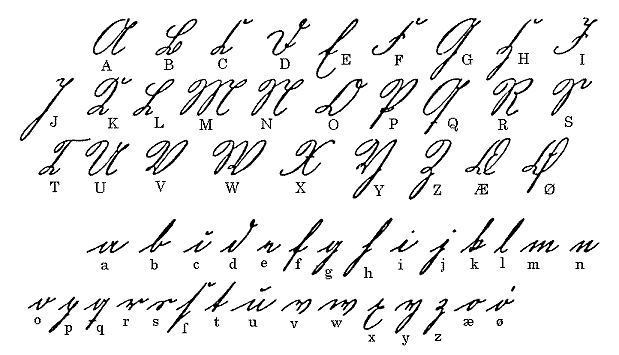
Is that Y or a U?  Below is the GERMAN 1890 "perfect penmanship" called Kurrent, from Wikipedia. Hungarian children were going to school and learning to speak, read and write German.

Image result for Deutsche_Kurrentschrift

The best thing to do is find yourself a patch of the same handwriting on the same document and look for words that you are guaranteed correct, such as the word for BAPTISM, or the way the MONTHS are written, or the often elaborate headings.  Look for how that particular person who hand wrote it forms their capital letters and so on.

But also check Hungarian surname lists which are available on web sites featuring surnames from current phone books, as an example. For instance, there has been confusion on databases and elsewhere between the handwritten names TAKACS, TAKATS, LUKACS, LUKATS, FEKETES, LAKATOS.  Knowing the MEANING of the surname may help somewhat.   (Weaver, Luke (There are surnames relating to the writers of the New Testament/Bible Mathew, Mark, Luke, and John), Black, Locksmith.)

Also, as an example, I see the same family surname TAKACS written TAKACS, TKATS, TAKACH, TKACH, TAKAS, though some families brought forward one of those spellings as their official spelling and another did not, sometimes it IS the same family.  Again, by building the family in the same town you will note that you may have to search for ALL the variations in order to find what you're looking for. The same family can have their name spelled one way in an area that is highly populated by Slovaks but when they live in Hungary surrounded by Hungarians, another. (The variation may or may not indicate an ethnicity.)

Good news.  You can scan the FAMILYSEARCH using * not only at the END of a name, but at the beginning of the name.  Up to three * at a time. So try *szke  or  *szk* or even this: T*k*c* Eliminating vowels helps since these can appear inconsistent.

Another thing for which the * search is useful, is the change of endings of surnames in Hungary and Slovakia.  The SZKI turned into SKI or SKY, the TH turned into just T, the LAI turned into LAY or LEY, and the DRAI, turned into DRA, DREY, a AI at the end of the name, turned into I, Y, even IY.

Also, notice that the letter s is written as f (and visa versa). And the letter j is often turned into a y.

C 2019-2025 Magyar American BlogSpot  All Rights Reserved including Internet and International Rights.

Please credit me when using this information. It's hard won for me and good karma for you!

To pull up all posts in this series, click on the tag GenTips: Hungarian- FamilySearch  

Monday, August 12, 2019

NO LONGER NOBLE BUT STILL : MEANINGS OF WORDS IN CHURCH RECORDS : USING FAMILY SEARCH FOR HUNGARIAN GENEALOGY RESEARCH - STRATEGY #6

NO LONGER NOBLE BUT STILL :  MEANINGS OF WORDS IN CHURCH RECORDS : USING FAMILY SEARCH FOR HUNGARIAN GENEALOGY RESEARCH - STRATEGY #6

In previous posts I mentioned it's exciting for the family historian or genealogist to find out there is nobility in the blood line, not because you want to Put On The Ritz, but because it means you may keep going further back in your research. (After all, becoming American Citizens your noble immigrant ancestor gave up their titles.) You may be able to link to census, patents of nobility, information in the Urbarium or in the archives of the National Archives of Hungary! 


It's exciting to think that your ancestors were contemporaries of George Washington, our first President of the United States. I always wonder how much news they received in Hungarian villages, how much they knew about revolutions in other countries such as the United States or France.

One thing I've become sensitive to is that pre-1848 the BAPTISMAL records are recording professions and status, and you'll see notations of nobility.

The word IGNOBLE means "not a noble." 

N.  No. or Nos. is an abbreviation for Noble/ Nobilis. 


NEMES means NOBLE but NEMET simply means German.

B.  abbreviation for BARON. Though Barons usually own land and are nobles, a person can be a Baron and not be noble.


D. in Latin DOMINUS is related to the English word dominating or in charge - the boss - be that Noble or Baron. Sometimes a government official.  


You may also see notes that the person is a TISZT meaning Officer in Hungarian - meaning in the Military or a Governmental person.  Other resources may confirm their rank or roles.  

In Latin a PLEBE is someone who is a Commoner. 


In Latin an OPIFEX is a person who has a Trade or Business. (This word does not mean "Officer" as in the military.)


In Latin a JUDEX is not a Jewish Person.  They are a Judge.  (Or in some way working within legal professions or legalities.) If a person is Jewish, they will likely be noted as "Moses" / Mos. or "Izraelite" / Izr.

IPAROS in Hungarian translates to Industrialist - currently. Pre the Industrial revolution though I believe it simply relates to being a craftsman or manufacturer, perhaps someone who is a "maker." IPARI TANULO (but you'll see IPARI) is a craftsman's apprentice.  Crafts include a wide variety of professions, some within the arts today. Look for more information on what they did for a living.

A "BAN" suggests a person in possession of a castle, or local ruler. BANYASZ is a miner. (Banya means mine.) A Ban may or may not also be a Baron.

A "FAMILIARES" is usually a lesser noble (or a broke one) who works for a higher noble.  Careful! This word does not mean the person is FAMILY.


A "Burger Noble,"  is an English term but based on the German word "burger" is an Urban  - City or Town - Noble, who may also have country or agricultural possessions locally or in many counties but indicates a choice of city life. City life is sometimes associated with higher education.  (Since "towns" had far less population in previous centuries than they do today, you might still find this person in what we consider to be a "village.") 


In Hungarian the term "UJMAGYAR" meaning New Magyar - or New Hungarian - means gypsy.  When progressive Queen Marie Theresa (of the Austrian-Hungarian Empire) decided that the gypsies would be accepted as Hungarians she decreed them UJMAGYAR. They were the outsiders unlike the various ethnic groups settled and mixing.

Nobility was abolished after 1848 in Hungary. So in some cases you may note that the same couple having more children after 1848,  who with previous children were listed as nobilis on church and other records, no longer are so listed. That goes for the Godparents too.

By building the family as previously suggested, you will likely find the same couple pre 1848 mentioned as nobles which, as stated before, can lead you to records further back. Sometimes the priest will write in something that translates to "This man is a Big Shot."  (Gubas Mester) which can be a clue. I understand that basically the slang refer to the Big Coat worn by men. Think Big Man on Campus/ in Village.  (Like the man pictured on the background of this blog! Updated 202, here's the picture:)


When the Godparents are nobles or one of the parents is listed as a noble but the children are not mentioned as such what's going on? Often employment. The man or women may come from a family of Familiares. The employee asks the wealthy boss or high status person to honor him and his wife by being Godparents to the child or children. Such a man who asks his employer to be a Godparent was likely a "Major Domo" or Estate or Business Manager to the Noble. It's also possible that because the Wife/Mother was noble but married someone who was not, the nobility is not transferred to her children. If it's a remarriage for her, her previous set of children with her first noble husband may still be nobles while the next set is not. Because of this tradition, a woman probably felt great pressure to maintain status by not marrying "beneath" her but I think women preferred marrying a commoner with money than a broke noble.

Other records to check include Land Ownership, Wills, Charters (which often explain how land is being given, taken away, because of death, military victory or failure, etc.)  Definitely check the HUNGARICANA site, associated with THE NATIONAL ARCHIVES OF HUNGARY, for CHARTERS.  Run the name of the village, town, or family surnames and see what comes up.

HUNGARICANA  link here.  A great resource!

Personally, I have a line that I'm trying to link to that is quite represented in what is now Slovakia on the Urbarium. I may have to sell my soul for a translation from Latin in really terrible handwriting though. By running the name in the Hungaricana website database, the surname is mentioned in the 1300 - 1400 era! 

One more thing: Unlike the Craftsman Apprentice -  IPARI TANULO - who generally married at about age 20 while working under a boss to learn a trade and married a village girl about 18 - wealthy nobles didn't have to work for a living and often married YOUNGER. It was assumed that the husband would provide the income and support of a wife and children, in the 19th century and earlier financially capable teenagers married. There goes your math.

Should you notice your immigrant ancestor (usually a woman) married at 14 or 16, very likely her father - or her parent(s), considered that she was marrying a man who could afford to take care of her (financially and otherwise) and any children they would have. Forget our present-day notions of "teenage" years because you were either a child or an adult back in the day. It's not for nothing that both Jewish people and Christians marked the age of 13 as adulthood with ceremonies such as Bar Mitzvah's and Confirmation. Gypsies also considered 13 old enough to be adult.

C 2019-2025  Magyar American BlogSpot All Rights Reserved including Internet and International Rights.

Please credit me when using this information. It's hard won for me and good karma for you!

Note: This post has been edited slightly and recolored as the first and second tries were not holding!  I hope it's more readable now!  August 18, 2019  Additional information added August 27, 2019 and August 29, 2019. Edited for clarity February 1, 2025.


This post is part of a series.
To bring up all posts in the series, click on the tag GenTips: Hungarian- FamilySearch  
********************************

Saturday, August 3, 2019

DATABASE TO OTHER LOCATIONS : GENEALOGY MYOPIA: USING FAMILYSEARCH FOR HUNGARIAN GENEALOGY RESEARCH - STRATEGY #5

DATABASE TO OTHER LOCATIONS : GENEALOGY MYOPIA: USING FAMILYSEARCH FOR HUNGARIAN GENEALOGY RESEARCH - STRATEGY #5

GENEALOGY MYOPIA is very common.  That's why you get map or border bound. Or bound by your assumptions.  It's easy enough to fall into this trap.  After all, RECORDS ARE ORGANIZED BY COUNTIES, even if lives were not.

You're excited to learn, using the immigration/ ship records/ or Naturalization records in the United States or the World War I draft registration of your ancestor, the name of a village or town in the Old Country they left or were born in. Then you find the Baptismal Record for your great grandpa that agrees with what it says on his U.S. military - draft registration, his Social Security Application, his Death Certificate. (That's proofing!) So you become knowledgeable about that town and place in the Old Country and may hope someday to travel there. Pretty soon you keep isolating or "refining" your searches on databases and otherwise for more ancestors to that place, say Szatmar County, and darn, nothing much is coming up.  

You expand out County after County and pretty soon you're learning the Old German or the New Slovak names for settlements in Lipto. There is entirely too much information, too much too sort through, but you lose track of time while you research.

If you're lucky, using a database you'll find the same family before they moved to the location you started with. Some couples and some births make sense -agreeing with other documents. Again, without DEATH RECORDS and MARRIAGE (and REMARRIAGE) RECORDS, it may be impossible to proof your research and proof you must. Scan using the parent's names and see what comes up and let that lead you to the images of the microfilms.  MARRIAGE and DEATH RECORDS are necessary to proof.

If database use is bringing up TOO MUCH INFORMATION, consider looking at a map of Hungary as it existed before 1920 and look at the counties.  Also look at old maps for old roads and village locations. (It's easier to go around a mountain on a road than cross it by foot. And the railroads improved transportation and greatly influenced which towns prospered.)

Some of the old counties such as ZEMPLEN are now much in SLOVAKIA and many previously Hungarian counties are in ROMANIA now. The FAMILYSEARCH DATABASE does recognize that Hungarian researchers may find themselves in Slovakia and visa versa but that doesn't mean you won't need to go to records in "CZECHOSLOVAKIA", AUSTRIA, POLAND, YUGOSLAVIA, SERBIA, CROATIA, or ROMANIA or UKRAINE. 

Be it the United States or another country, try not to get map bound. This is especially the case if the place someone lived is NEAR A BORDER. Consider that a person could have lived their whole life in one place but left to live elsewhere in old age (perhaps in with a child who would care for them - in the case of Hungary this was usually a DAUGHTER - and may be buried elsewhere, such as a family graveyard in another county, or the less expensive cemetery in the next county. 

C 2019-2025 Magyar American BlogSpot 
All Rights Reserved including Internet and International Rights.

This post was slightly edited on August 13, 2019

To bring up the series of posts on this subject, click on the tag GenTips: Hungarian- FamilySearch  

Saturday, July 27, 2019

THOSE HOUSE NUMBERS and VILLAGES : USING FAMILYSEARCH FOR HUNGARIAN GENEALOGY RESEARCH - STRATEGY #4

THOSE HOUSE NUMBERS and VILLAGES : USING FAMILYSEARCH FOR HUNGARIAN GENEALOGY RESEARCH - STRATEGY #4

Using FAMILYSEARCH indexed BAPTISMAL RECORDS, as well as DEATH and MARRIAGE records that exist on microfilms that are not indexed, you'll see in the notes what appears to be house numbers. Sometimes you'll see a note that the person is local but not in town - likely on the outskirts on a farm and the term commune is used. (Someone listed in commune is a higher rank than an Inquillis.  Sometimes, due to inheritance, someone who starts out as Subinquillis can rise to Inquillis and all ranks could have other people renting from them or living with them. Commune implies ownership of land.) 


You'll also notice that people from other places have their children baptized at the church.  And not finding an ancestor who "should" be in the same church record, perhaps they can be found at a neighboring village church or the larger, more richly decorated church in a nearby city in the same diocese. Usually this is because their town does not have a Catholic or Reformed church so they belong to the church in the village where there is one. I have not yet been able to determine if the common custom in the United States of marrying in the bride's church was done in Hungary. Since traditionally the bride went to live with the groom's family prior to marriage, that suggests she married in his church and town.***

I've read all around it but there seems to be no current information on why the house numbers or addresses given in BAPTISMAL (and other) records from Hungary, Slovakia, and the Slavic Lands (even if that means German immigrants or persons in Transylvania or Romania) are what they are. I'm told these do not reflect current house numbers. But then again people were living on streets that we'd consider lanes and this was long before there were paved highways with signage. Many of these places listed with house numbers were no doubt rural or farmsteads.

I recently read that these numbers refer to the order in which houses were built.  A lower number indicates an older building or perhaps a longer residency. Locals might know the history of the settlement so contacting a Historical Society, if there is one, is an idea. 

One educational paper I read suggested that the house number MIGHT BE CONSISTENT with the number on the 1869 Census of Hungary. (All counties are not available, not at FAMILYSEARCH or anywhere!)  That certainly is worth a go see!

I know this can be a disappointment when using Google Earth or YouTube videos of drone fly-overs, because you want to see where your ancestors lived, if their house is still there or a ruin. (I used Google Earth to see a house in New Jersey, still standing and listed with a real estate agent, which some ancestors lived in. The place looked to be in a decaying neighborhood but with real estate information and so on, I knew that it had only been built a few years before they moved in, so the brick was then bright and new. I noticed HUNGARIAN MOTIFS had been applied to the facade! ****)

You might relate the house number or property number in a rural village or town a bit to what happened on some of the early American and colonial era census of primarily agricultural lands. Farmsteads were divided and divided again due to inheritances and so there were clans of families living communally. Basically, everyone knew who everyone else was in the area and which farm was theirs and how to get there ("Go up the hill till you see the road by the fallen down apple tree...") So who really needed house numbers?

Here are some other things to consider:

Why is a family who is listed as Reform or Jewish in a Catholic Church record?  In that case it's because the Church is the official record keeper for the area. Also if a family lives in a place where there is no church at all or no church for their religion, they traveled to the church where the ceremony and record has taken place. Generally this was about 5 miles or less away as they probably WALKED. Finding they came from somewhere else to the church can lead you to another film, another record based on place. (Check the FAMILYSEARCH CATALOG for the location to see what houses or worship existed in the town or nearby.)

It may seem that house numbers are useless information. But they are useful!

Let's say that you notice that the family you have recreated through all those baptismal records, that family group, lives at #456.

You want to go through the years and see WHO ELSE LIVED THERE at #456 and when. Using house numbers you may just locate people who prove to be siblings, parents, relatives of some kind.  Maybe the house belonged to the bride's family or they moved in with an uncle.

Using this method I came to understand that someone 16 years older than my ancestor was coexisting in the same house with their own wife and children: too young to be a father, possibly an uncle or older brother (maybe from another marriage.)

You may find generations of family, some with different surnames are living at the SAME ADDRESS contemporaneously. Perhaps the dwelling is large enough for them all, even though they lived in conditions more crowded than we like.  (Many of the houses were one room and included the goats and chickens living inside. I read that the leaders of clans long ago lived in the equivalent of a 12 by 12 log cabin, which might have been an upgrade from a tent.)

You may find that your recreated family group DID NOT LIVE THERE at #456 PRIOR TO THE BIRTH of the first child.  I was able to confirm 1876 as the beginning of any known family member living in a certain town by finding another non-related family living at that address in 1875 and before. That means the great grandparents were from somewhere else. I've also - eventually - learned the relationship of the people who lived in the house years earlier to the people living in it later.

You may find that either the wife or husband's family has roots in the village, but not both.

I've found that persons of nobility or wealth or both seem to have traveled further for marriage. In villages it was generally the girl or boy next door who became a spouse. *** Traditionally in Medieval times, it was the wife, at 10 or 12 years old, who was sent as a girl to the house of the groom, but I do not find that to be the case in the 1800's. So employment then, as it is now, was probably the motivating factor. If a young man went to a relative or nearby village as an apprentice, this might be where he encountered his wife to be.  He married there and they stayed there. (Consider too that an orphaned child might be taken in by relatives miles from his or her birth place.)

I believe that one of my ancestors who proved to be an orphan at the time of marriage probably was invited to live in with an uncle and that lead to his apprenticeship and eligibility for marriage.  As for his bride, I suspect she was also orphaned but cannot find her birth, her parents, their marriage...

Following house numbers and locations, you may find you have more surnames and families to focus upon.

*** Added information and editing done on August 27, 2019  In some places brides spent most of their time among other women in the village while the men went to work elsewhere. It was almost as if, other than the marriage partner, they had separate lives and did not much associate with other men. This implied a support system among women, individual mother-in-law's likely had different personalities. In other places, young men and women were free to associate with each other and have friendships. In some places the teenage women would go to the spinning house to spin together in the evenings and teenage men were allowed to go visit with them (and flirt).  

If you do not find the bride or the groom in the village they appear to be settled in, baptizing their children in that church, this is where scanning the database to find the birth village may be the next thing to do. It's incredibly helpful to find the AGE of the bride and groom from their marriage record. However, sadly, it may be the DEATH record in the same village that gives you an AGE. Find the person who would be the right age based on the death record and scan for someone of that name and age elsewhere.  Go to that place and first thing, look for a MARRIAGE there. *** Recent reading indicates that in some villages the whole town had expectations of who would marry who, based on what part of the village (which land) they lived in. Consideration was to keep the village intact. Villagers were very interdependence. **** These same motifs appear on some Hungarian's tombstones.

Please note that this is one of a series of posts about the usefulness of certain genealogy-based websites and you can find the other posts by searching through the archives, by searching within the blog for the term genealogy, and so on.

C 2019-2025  Magyar-American BlogSpot 
All Rights Reserved including Internet and International Rights

This post is part of a series.
To bring up all posts in the series, click on the tag GenTips: Hungarian- FamilySearch