Pages 169-174 From GENGHIS KHAN His Conquests His Empire His Legacy by Frank McLynn.
The Mongols were polygamous (taking many wives) and polygynous (taking many concubines) but the children of the chief wife were the ones who could be considered for the succession when their father died.
Genghis Khan's troops killed half the population of Hungary in the 1241 era, and one of the Mongol warriors favorite activities was raping the women, often in front of their father or husband. So what was life like for a MONGOLIAN WOMAN? Well, it turns out that compared to most medieval women, they had better status. This didn't mean they weren't treated as chattel, but consider; Genghis OUTLAWED RAPE. In the past only women were executed for adultery but now both men and women suffered the same punishment, "unless they were rich enough to buy themselves out of the predicament." Women could also decided if they wanted to be married and divorce became possible for them as it was by mutual consent. They did not expect a woman to be a virgin when she married and there was no stigma about having children before marriage or divorcing with children or having been married before. What this means is that if a couple could deal with their differences mutually and peaceably, the consequences were not great.
For the chief and high status men, marriage was not a personal decision so much as a community decision. Marriage was also considered to be eternal. Genghis was concerned about inbreeding but his precautions were not always followed. (It's possible that shorter lifespans were a result.)
In their nomadic and hunter-gatherer society, unlike the more European Agricultural societies, women and men performed many of the same or similar jobs, so there wasn't the divide of roles or "men's work," seen elsewhere. She was kept busy with household and other tasks. She was expected to know how to drive a large wagon, some with as many as 20 horses. "One woman would often be expected to drive as many as thirty interconnected wagons,; seven women would often be needed to transport a single oligarch's possessions, for one of these elaborate dwellings, when transported could fill over two hundred wagons; moreover, a single noble with multiple wives might have several such portable palaces." (171) Sometimes the woman had to figure out how to load the horses - and camels - so that everything was weight distributed.
Wise old women were prized for their wisdom and thought that some women had magical powers. Women did not have their feet bound as women did in China, nor did they wear clothing that prevented than from moving or seeing freely, such as Person chadors or Arabic burqas. They could even be regents or the realm or advisors. So in the 13th century there were many notable Mongol women. All this upset visitors from the Christian and Muslim faiths, and Buddhism and Confucianism when adopted from China, also reduced the role of women.
Overall, Genghis was considered a very pragmatic man and a genius about human nature. All the changes he made so that women would have a greater role and more respect than they had before were probably made to make life easier for the entire tribe.
C 2016 Book Excerpt/Review Magyar American BlogSpot All Rights Reserved
Showing posts with label Rape. Show all posts
Showing posts with label Rape. Show all posts
Sunday, August 14, 2016
Saturday, August 6, 2016
MONGOLIAN INVADERS KILLED HALF THE HUNGARIAN POPULATION - GENGIS KHAN and HIS TROOPS RAPED WOMEN
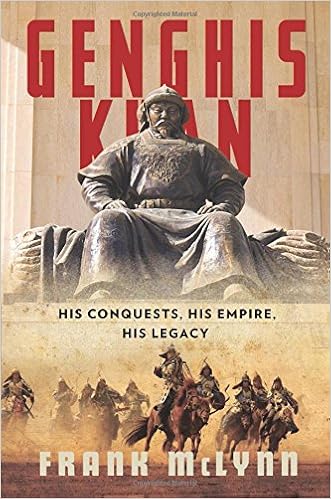 After I learned that the Mongolian Invaders had killed half the Hungarian population (or you could say half the population of peoples living in the land known to us as Hungary) I wanted to know more. I'm one of those people of Hungarian descent who has some Asian features, and I've already wrapped my mind around the probability that some ancestor of mine was raped and that these features have been brought forward though the intermarriage in Hungary of others with a similar genetic heritage. Or could it be instead that these features are not Mongolian, but of the original Magyars?
Author Frank McLynn did a great job of explaining their culture, their world view, their expertise, and their military strategy, blow by blow. But I was distracted and I decided to focus only on the chapter about the Invasion and Devastation in then-Hungary.
Batu and Subedei where the men who closed in on Hungary, then a nation of around 2 million people that went from Transylvanian Alps to modern Croatia, and the Pannanonian Plain was their base for military operations. This was the era around 1236 - 1242, a time of Crusades, and a time when Hungary had been through a number of rulers, had a relationship with the Vatican which had it's own army, and was thought to have its own impressive and imposing military force, capable of defeating any European country.
However, the Mongols were greatly feared and there were also issues between the Cumans and the Hungarians so they proved not to be the hoped for allies. Subedei was a genius strategist who decided to use three armies to invade the land and have them all unite at the Danube. His brother Shiban covered the northern area between Poland and Moravia. Quadan went south-easterly between the eastern Carpathians and the Dniester river, and the main army under Batu went through the Verecke Pass and the upper Tisza Valley.
There were few good roads in Hungary and the landscape dotted with villages proved to be mostly indefensible. The Mongols played the game of allowing a troop to think they were gone or had won and then would come back to massacre them. Notable men including Archbishops and Bishops and those important in the politics and rule of the region also fought in battle and died. Ethnic Poles and Germans living in Hungary fought too. The Mongols continued a systematic program of atrocities and exterminating the people. They also enjoyed mass rape, especially doing so in front of the woman's father or husbands.
Famine and disease, especially the sicknesses transmitted from having so many dead corpses around killed off many more. The farmers were unable to farm and have crops in for a year after the Mongols left, there was death by starvation.
Infighting within the Mongol Empire was also occurring, as so many troops had left there to fight, and by 1279 it was divided. The Golden Horde of China's Quabilai's dominated Russia for another two hundred years. Chagatai Khanate (a place) in central Asia dominated parts of today's Mongolia, Russia, India, China, Pakistan, Afghanistan, Turkmenistan, Uzbekistan, Tajikistan, and Kazakhstan. Then an area that included eastern Turkey, Iran, Iraq, Azerbaijan, Georgia, Armenia, western Afghanistan, south-western Pakistan and parts of modern Turkmenistan called the (place) Iklhanate.
There seems to have been no time in all this warfare for a nice Mongolian boy to fall in love with a nice Hungarian girl and get married, so there is a very good chance that if you have facial or other bodily characteristics that are most often "Asian," rape is likely the way those characteristics came into the Hungarian (or Polish, Slovak, German, or other ethnic population.) Either way, if you have Hungarian heritage someone in your lineage survived the carnage, at least long enough to have a child.
Learning that easily half a million to one million were killed by the Mongolians in the mid 13th century Hungary, not so long after the country's founding, I've wondered what impact they had not only on the Hungarian looks but other genetic aspects of our humanity. Culture is mostly learned, I think. You could say that I think of ethnicity as having more to do with nurture than nature.
C 2016 All Rights Reserved Magyar American Blogspot
