Showing posts with label Mongols. Show all posts

Saturday, August 15, 2026

SZEKESFEHERVAR : KING SAINT STEPHEN AND MANY OTHER HUNGARIAN KINGS : SACRED CITY and CORONATION SITE : WONDERFUL PLACES IN HUNGARY #35


HUNGARIAN CONSERVATIVE : CORNATION OF SAINT KING STEPHEN and OTHER HUNGARIAN KINGS 


Excerpt: Yet, the connection between the medieval foundation of the state, King St Stephen, and Fehérvár (meaning ‘white castle’), 60 kilometres from Buda, is still inseparable. Even the modern name of the town, Székesfehérvár, in use since the 16th century, is a reference to the royal throne (with the Hungarian ‘szék’ meaning ‘chair’ or ‘throne’). Concerning the royal seat, Fehérvár’s sacral–dynastic character is undoubtedly in its favour: namely, the burial here of the first Hungarian king St Stephen (reigned 1000–1038) and his son Prince Emeric (d. 1031). Both were canonized in 1083, and their tombs became a pilgrimage site of national fame. In the middle of the 11th century the Hungarian annals refer to the city as a ‘metropolis’ (literally ‘mother city’). The royal treasury and coronation insignia (which were temporarily transferred to Visegrád in the 14th century), the national banner of war, the keeping of the royal archives, and the coronation itself made it one of, if not the primary centre of the country. The strategic location of this non-swampy city was also unrivalled; in 1242 the Mongol armies could not capture it either. As early as 1055, a document that has survived in its original form recorded the earliest words written in Hungarian: ‘military road to Fehérvár’. The founder of the city is undoubtedly King St Stephen, and a few years after his coronation the town is also mentioned in several documents. Besides, the opening of the pilgrimage route to the Holy Land by Stephen around 1020 was at least of similar importance. Heading there, the pilgrims passed through Fehérvár, as did the Crusader armies crossing the Balkans to Constantinople and the Middle East.

***
His original burial site was destroyed by the Ottoman's but in the 1930's a new mausoleum was built which contains the 11th-century sarcophagus of the deceased king. But his hand (whch didn't decompose, perhaps proving Stephen's sainthood, is venerated as a relic that is kept in Saint Stephen's Basilica in Budapest.

Click on the label Wonderful-Hungary to get to the entire series on this theme.

C 2026 Magyar-American BlogSpot  All Rights Reserved


Sunday, October 16, 2016

THE SILK ROAD by VALERIE HANSEN : MAGYAR AMERICAN BOOK REVIEW

A NEW HISTORY WITH DOCUMENTS
WITH COVERAGE OF THE MONGOLS and MARCO POLO
C2017 Oxford University Press
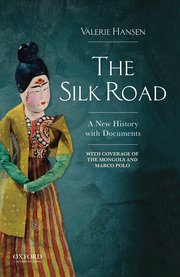


I confess, I saw that this book, which came from the history - genealogy department of my library, had pictures of artifacts (including clay monkeys from Yotkan that are sexually explicit and probably used to enhance fertility), a burial called the Niya coffin, in which a man who died of knife wounds and his smothered wife, dating 3rd or 4th century CE, were buried together and the garments they wore survive in color,  an ancient Buddhist Stupa (that barely looks like Buddha), and other items that are from archeological digs, and I wanted to read it from cover to cover.  It has translated poetry, letters, Hebrew prayers, and is also about religion, the spread of Buddhism for instance.  There pictures of silk fabric fragments that help you understand the designs that people were able to produce hundreds of years ago. 


I will probably have to order this book back in to do so; I found myself unable to concentrate and give it the time it deserves.  I decided to focus on the routes called "the grasslands" . one of which went from Europe (Vienna) and seems to go through upper Hungary or lower Poland on today's map.


In college I took a literature course that focused on Crusades era travelers including Marco Polo, John of Plano (also called John Plano Carpini0, and other very early manuscripts (that were in translation to English). I was also aware that the travels of Marco Polo are suspect.   There are a lot of maps in this book and on page 392 there are several routes on a grasslands map, including those used by William of Rubruck, Rabban Sauma, Ibn Buttuta (another person whose writing we read in the course), as well as Marco.  Rabban left France, further west. 


The grassland routes went through Eurasia into the Mongol empire that had been unified in 1206 by Genghis (Chinggis is his Mongolian name) and this way the travelers bypassed the mountains and the deserts to the south.  (Sounds like the way to go to me.) 


On page 394 it says that  after Genghis died it was his son, Ogodei, who  led armies to victory over Georgia, Armenia, Iran, Kiev, and Hungary, creating the largest continuous empire in world history.  (Other Silk Road routes took travelers through India as well.)  This expansion took place during the era of Christianity called the second crusades which began in 1100 when the pope called upon European Christians to travel to the Holy land to capture Jerusalem from the Islamic rulers.  According to author Valerie Hansen, the Pope hoped an alliance with the Mongols would be helpful.


Now what surprised me was learning that THERE WERE ALREADY CHRISTIAN MONGOLS!  "The East Syriac Christan Church, based in Iraq, had sent Uighur speaking missionaries into Mongol territories before 1200, and they had one converts, particularly among the Ongut tribe, and some Mongols from the Kereyit and Naiman tribes converted after 1206."  Some of Ghengis' descendants married these Mongol Christians!  "The Europeans also believed that a mythic Christian ruler named Prester John ruled somewhere in Asia..."  (I've heard of Prester John before, and I believe that he remains a mystery and may have always been a myth.)


This was also the era in which SAINT FRANCIS OF ASSISI started the Franciscan order!


Somehow, knowing that brought the whole Mongol conquest and the founding of Hungary into historical perspective of me, and didn't seem so long ago anymore.


Pope Innocent IV sent John of Plano Carpini  (Giovanni del Plan di Carpini) to the khans court in Mongolia, or tried to...  Carpini carried a letter.  I recall from my college class that this man was portly, his bones ached, he was about 60, and the trip was hard on him.  He spoke Latin and French only, so he took along a man named Benedict who knew Russian and Polish...  I suppose that must have helped for some of the trip!  On the way the letter was translated at the camp of Batu, a Mongol prince.


The translation was from Latin to Russian,  Russian to Persian, and Persian to Mongolian.  (Page 396)  Who knows how the communication had altered?


Carpini and his companion covered 3000 miles in three and a half months, and I don't want to ruin this rich story for you, but it would be some time before they were able to deliver that letter.


It wouldn't be called the Silk Road if there were not a lot of silk and other beautiful fabrics worn, made into tents, and used for trade.  Gifts were expected.  Gold and Silver were in abundance through plunder.  The merchants they encountered included Austrians, Poles, Greeks...  (So, while people back home feared the Mongols, the merchants apparently knew enough about their culture to be able to trade with them.)


I'll leave my brief version of just one of the amazing stories in this book here.   Whenever I read about the Mongols and the Silk Road, the merchants moving along the routes, I often think about what we are learning about the migration of our DNA through thousands of years. 


So, though I have yet to read this book cover to cover, I do recommend it highly!


C 2016  All Rights Reserved  Magyar American Blogspot

Saturday, August 6, 2016

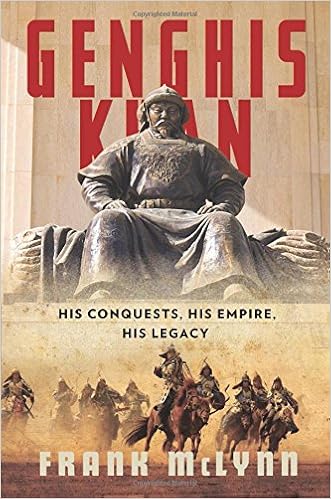
MONGOLIAN INVADERS KILLED HALF THE HUNGARIAN POPULATION - GENGIS KHAN and HIS TROOPS RAPED WOMEN

  After I learned that the Mongolian Invaders had killed half the Hungarian population (or you could say half the population of peoples living in the land known to us as Hungary) I wanted to know more.  I'm one of those people of Hungarian descent who has some Asian features, and I've already wrapped my mind around the probability that some ancestor of mine was raped and that these features have been brought forward though the intermarriage in Hungary of others with a similar genetic heritage. Or could it be instead that these features are not Mongolian, but of the original Magyars?

Author Frank McLynn did a great job of explaining their culture, their world view, their expertise, and their military strategy, blow by blow. But I was distracted and I decided to focus only on the chapter about the Invasion and Devastation in then-Hungary.

Batu and Subedei where the men who closed in on Hungary, then a nation of around 2 million people that went from Transylvanian Alps to modern Croatia, and the Pannanonian Plain was their base for military operations.  This was the era around 1236 - 1242, a time of Crusades, and a time when Hungary had been through a number of rulers, had a relationship with the Vatican which had it's own army, and was thought to have its own impressive and imposing military force, capable of defeating any European country.

However, the Mongols were greatly feared and there were also issues between the Cumans and the Hungarians so they proved not to be the hoped for allies.  Subedei was a genius strategist who decided to use three armies to invade the land and have them all unite at the Danube. His brother Shiban covered the northern area between Poland and Moravia.  Quadan went south-easterly between the eastern Carpathians and the Dniester river, and the main army under Batu went through the Verecke Pass and the upper Tisza Valley. 

There were few good roads in Hungary and the landscape dotted with villages proved to be mostly indefensible.  The Mongols played the game of allowing a troop to think they were gone or had won and then would come back to massacre them.  Notable men including Archbishops and Bishops and those important in the politics and rule of the region also fought in battle and died.  Ethnic Poles and Germans living in Hungary fought too.  The Mongols continued a systematic program of atrocities and exterminating the people.  They also enjoyed mass rape, especially doing so in front of the woman's father or husbands.

Famine and disease, especially the sicknesses transmitted from having so many dead corpses around killed off many more.  The farmers were unable to farm and have crops in for a year after the Mongols left, there was death by starvation.

Infighting within the Mongol Empire was also occurring, as so many troops had left there to fight,  and by 1279 it was divided.  The Golden Horde of China's Quabilai's dominated Russia for another two hundred years.  Chagatai Khanate (a place) in central Asia dominated parts of today's Mongolia, Russia, India, China, Pakistan, Afghanistan, Turkmenistan, Uzbekistan, Tajikistan, and Kazakhstan.  Then an area that included eastern Turkey, Iran, Iraq, Azerbaijan, Georgia, Armenia, western Afghanistan, south-western Pakistan and parts of modern Turkmenistan called the (place) Iklhanate.

There seems to have been no time in all this warfare for a nice Mongolian boy to fall in love with a nice Hungarian girl and get married, so there is a very good chance that if you have facial or other bodily characteristics that are most often "Asian," rape is likely the way those characteristics came into the Hungarian (or Polish, Slovak, German, or other ethnic population.)  Either way, if you have Hungarian heritage someone in your lineage survived the carnage, at least long enough to have a child.

Learning that easily half a million to one million were killed by the Mongolians in the mid 13th century Hungary, not so long after the country's founding, I've wondered what impact they had not only on the Hungarian looks but other genetic aspects of our humanity.  Culture is mostly learned, I think.  You could say that I think of ethnicity as having more to do with nurture than nature. 

C 2016  All Rights Reserved Magyar American Blogspot


Saturday, June 28, 2014

MARCO POLO'S SILK ROAD : THROUGH TATAR and MONGOL and CATHAY IN the 13TH CENTURY

MARCO POLO'S SILK ROAD - The Art of the Journey - An Italian at the Court of Kublai Khan

is introduced by John Masefield and published by Watkins.  It's a beautiful book from it's red silky cover to all of its contemporary photographs that don't just make it beautiful but bring the reader closer to the sights and the cultures that Marco Polo witnessed and experienced hundreds of years ago and shorten that distance.  Polo's work is perhaps one of the earliest examples of TRAVEL WRITING that we have. 

The purpose of this book was to unconfused the reader by providing a map and mini chapters that move us along the silk road, which was a merchants route, as Marco proceeds to the court of the great KUBLAI KHAN, a grandson of GENGHIS KHAN.  Polo left Venice Italy as a young man and over many years encountered vast armies, amazing wealth, and sophisticated cities.   Sometimes they did travel for weeks without coming across a settlement but clearly the cultures were greatly developed. In particular he told of the unusual (by European standards) practices that various ethnic people had regarding sexuality and women: one group considered a woman unavailable for marriage until she had slept with at least 20 strangers who gifted her but once married she was expected to remain chaste.  The Khans didn't just have armies of 20,000 but 500 wives or concubines.

Just one little excerpt from page 134  Chapter 13 THE FASHION OF THE GREAT KHAN'S TABLE at his HIGH FEASTS

"And when the Great Khan sits at table on any great court occasion, it is in this fashion.  His table is elevated a good deal above the others, and he sits at the north end of the hall, looking toward the south, with his chief wife beside him on the left.  On his right sit his sons and his nephews, and other kinsmen of the blood imperial, but lower, so that their heads are on a level with the emperor's feet.  And then the other barons sit at other tables lower still,. So also with the women; for all the wives of the lord's sons, and of his nephews and other kinsmen, sit at the lower table to his right; and below them again the ladies of the other barons and knights, each in the place assigned by the lord's orders.  The tables are so disposed that the emperor can see the whole of them from end to end, many as they are....Outside the hall will be found more than 40,000 people; for there is a great concourse of folk bringing present to the lord, or come from foreign countries with curiosities."

Saturday, June 7, 2014

GENGHIS KHAN : "ASIAN" DNA : THE KIDNAPPING OF BRIDES TODAY IN CENTRAL EUROPE IS PLAY!

I've been reading around DNA of the Hungarian people, and the people of the Carpathians, Romania, and Central and Eastern Europe.  The science is getting more and more sophisticated but I think what I read so far is an argument that there was once a lot of mixing - maybe before ethnic identities were tribal. 

I decided to watch GENGHIS KHAN -TERROR and CONQUEST which is an older Biography video, because of that question of "Asiatic" blood in some Hungarians.  This video didn't bring up the fact that he had hundreds of wives or concubines and  maybe 500 children so that Genghis's DNA is in a huge number of people today like I hoped but I still learned a lot.

13th century Asia - what is Mongolia today - was desert forest and grassland and the Chinese considered the place and the people that lived there "The Barbarians." (Seems to me the notion that the other tribe is the barbaric one prevails today!) The tribes there included the Mongols, the Merkits, the Tartars, and the Naimans, and they were all nomadic.  China had already built the famous Wall by then to keep these Barbarians out.

Though there are many accounts of Genghis Khan and his conquests written by Persian, Russian, and Chinese scribes,  there is only one, written soon after his lifetime, that is considered dependable.  The book is called "The Secret History of the Mongols." It begins by saying this bloodthirsty man was born with a clot of blood in his hand. 

No doubt Genghis' power came from his fearlessness to slaughter not just individuals but whole groups of people in the days when this was hand to hand combat and swords, before military battles were fought with guns or the weaponry we have now that distances soldiers from the place they bomb.

The story is also about the abduction of women and the rape of women and the revenge for doing so.

I learned long ago that many Hungarian marriage ceremonies into the 19th century (and perhaps beyond) play acted the abduction of a woman to be a bride, said to be the way it was done when the Hungarians were also nomadic.  The bride who had been sewing, weaving, spinning, and doing needlework, and saving for her life as a married woman since childhood, and who was probably marrying someone from her village that she had known since childhood, would kick, scream, cry out, and make a performance of it.

SOME LINKS : BIOGRAPHY.COM MINI BIO OF GENGHIS  includes video.  (His enemies sometimes surrendered out of fear.)  by 1206 he was his people's Great Ruler.


TIMES OF INDIA - GENGHI GENETIC IMPACT ACROSS ASIA

EXCERPT: "Over 10 years ago, comparisons of Y chromosome lineages across Europe and Asia showed that a large number of Asian men shared a common Y chromosome. The breadth of the distribution of this haplogroup, and the extrapolation that roughly 0.5% of the world's population carried the same Y chromosome together with age estimates led to the idea that Khan himself might have left a lasting genetic impact across Asia.

More recently a study using genome-wide data with different methods and genetic markers but on a similar (but smaller) set of populations found evidence of admixture in the Uighurs dating to the time of Genghis Khan.

"As well as the Uighurs, we found evidence of this Mongolian expansion in a further six populations. These populations approximately span the maximum spread of the Mongol empire. Taken together we believe that there is now strong evidence that this event had a major impact on many Eurasian populations," scientists said."


  THESE AMERICAN PEOPLE ARE HAVING FUN WITH HUNGARIAN WEDDING TRADITIONS... 

BUT HERE'S WHAT THEY'RE DOING IN BUCHAREST ROMANIA...   ALL THESE BRIDES WERE KIDNAPPED FROM THEIR OWN WEDDING PARTIES!

IN MANY PARTS OF THE WORLD TODAY KIDNAPPING WOMEN AND FORCING THEM TO BE MARRIED TO THEIR KIDNAPPER ISN'T JUST PLAYING!  And I can't help but wonder what my own DNA says about the women of my heritage and who kidnapped them!


C 2014 All Rights Reserved  Magyar-American BlogSpot